/flexo2
Collaborative Project

FLEX O2
Reducing pulse-oximeter waste through reusable sensing hardware and a replaceable skin interface.
/CONTRIBUTION
I contributed research, materials work, 3D modelling, prototyping and reporting.
ROLE
Collaborative project
STATUS
Research, product design and physical prototype
/TIMELINE
October 2025
/TOOLS
Ansys Granta · material and lifecycle exploration
/flexo2
Collaborative Project
FLEX O2
Reducing pulse-oximeter waste through reusable sensing hardware and a replaceable skin interface.
/CONTRIBUTION
I contributed research, materials work, 3D modelling, prototyping and reporting.
ROLE
Collaborative project
STATUS
Research, product design and physical prototype
/TIMELINE
October 2025
/TOOLS
Ansys Granta · material and lifecycle exploration
/flexo2
Collaborative Project
FLEX O2
Reducing pulse-oximeter waste through reusable sensing hardware and a replaceable skin interface.
/CONTRIBUTION
I contributed research, materials work, 3D modelling, prototyping and reporting.
ROLE
Collaborative project
STATUS
Research, product design and physical prototype
/TIMELINE
October 2025
/TOOLS
Ansys Granta · material and lifecycle exploration


/Inside the project
Why are we redesigning the oximeter?
Disposable sensors simplify care, but their short life creates avoidable waste. Its one of the top contributors to medical wastes from Erasmus MC
/Inside the project
Why are we redesigning the oximeter?
Disposable sensors simplify care, but their short life creates avoidable waste. Its one of the top contributors to medical wastes from Erasmus MC
THE WASTE PROBLEM
The study estimated 515,000 kg CO₂/year from disposable pulse oximeters across Dutch medical centers, identifying them as the second most impactful medical waste stream. Erasmus MC’s Scope 3 footprint framed the challenge.

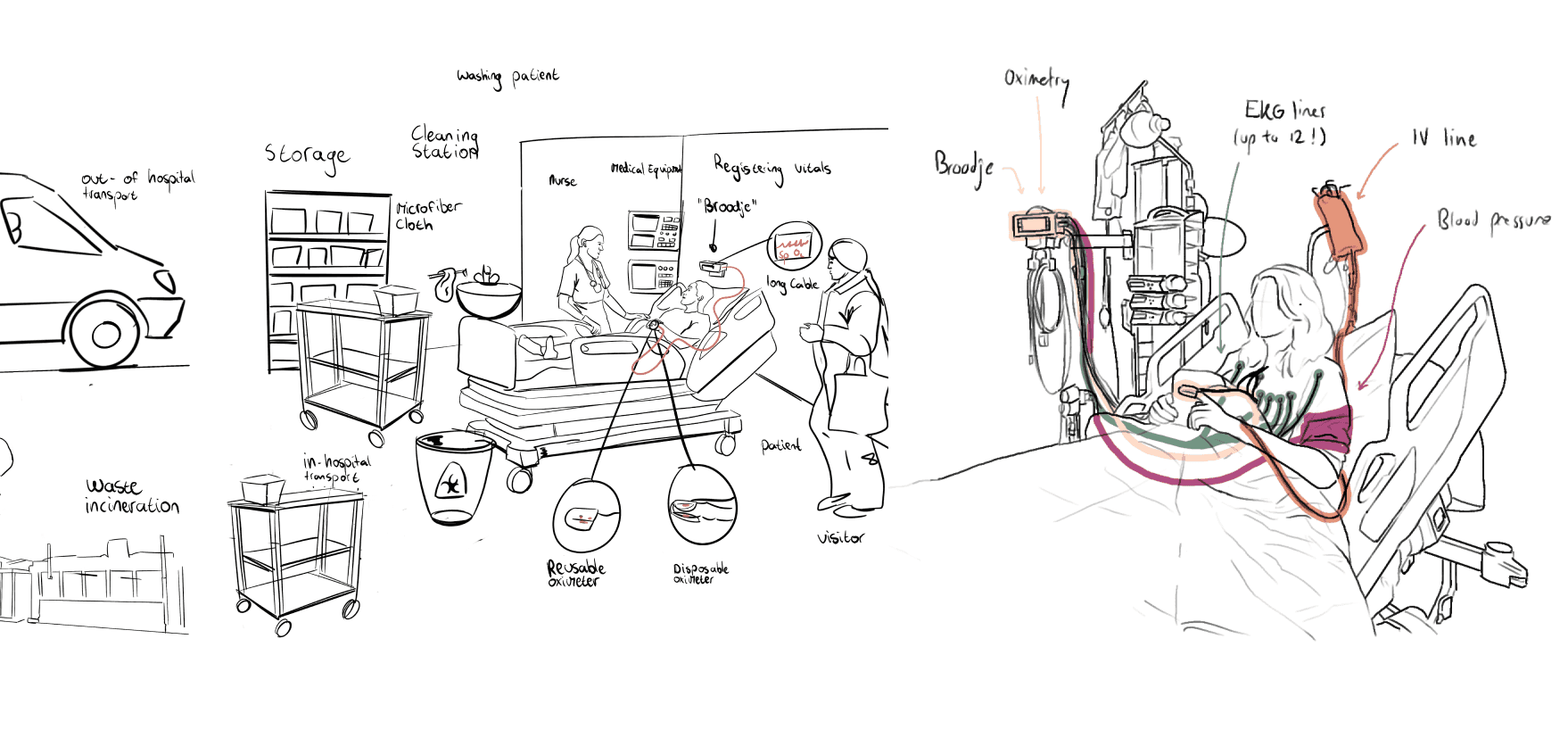
CONTEXT SKETCH / CURRENT USE SCENARIO
THE WASTE PROBLEM
The study estimated 515,000 kg CO₂/year from disposable pulse oximeters across Dutch medical centers, identifying them as the second most impactful medical waste stream. Erasmus MC’s Scope 3 footprint framed the challenge.
CONTEXT SKETCH / CURRENT USE SCENARIO
WHAT STAFF NEED
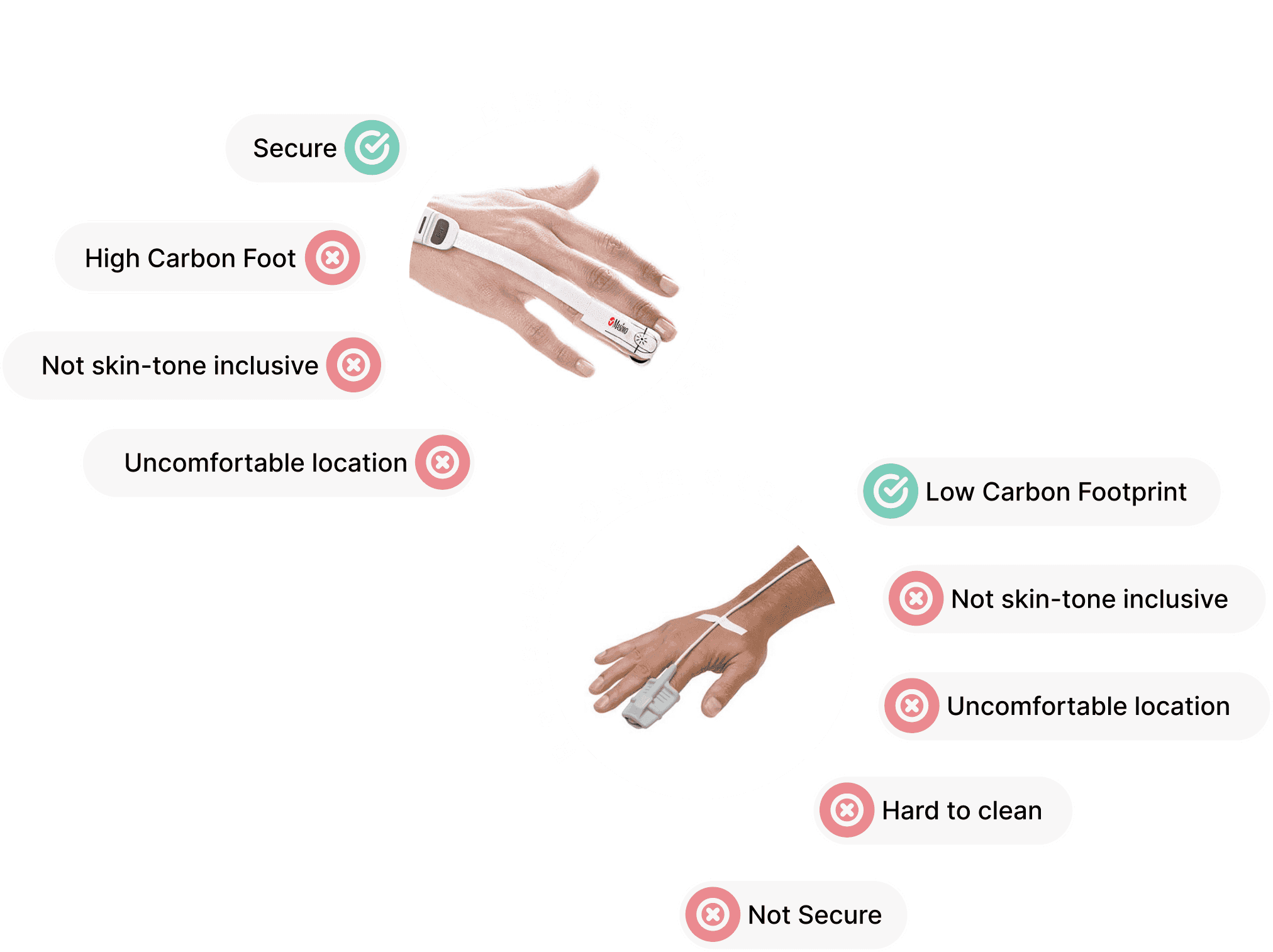
Staff favored disposable sensors for accuracy and convenience. Reusable alternatives brought slippage, discomfort and disinfection demands. Movement, low perfusion, pigmentation and finger size also shaped the sensing brief.
WHY REUSE IS WORTH EXPLORING
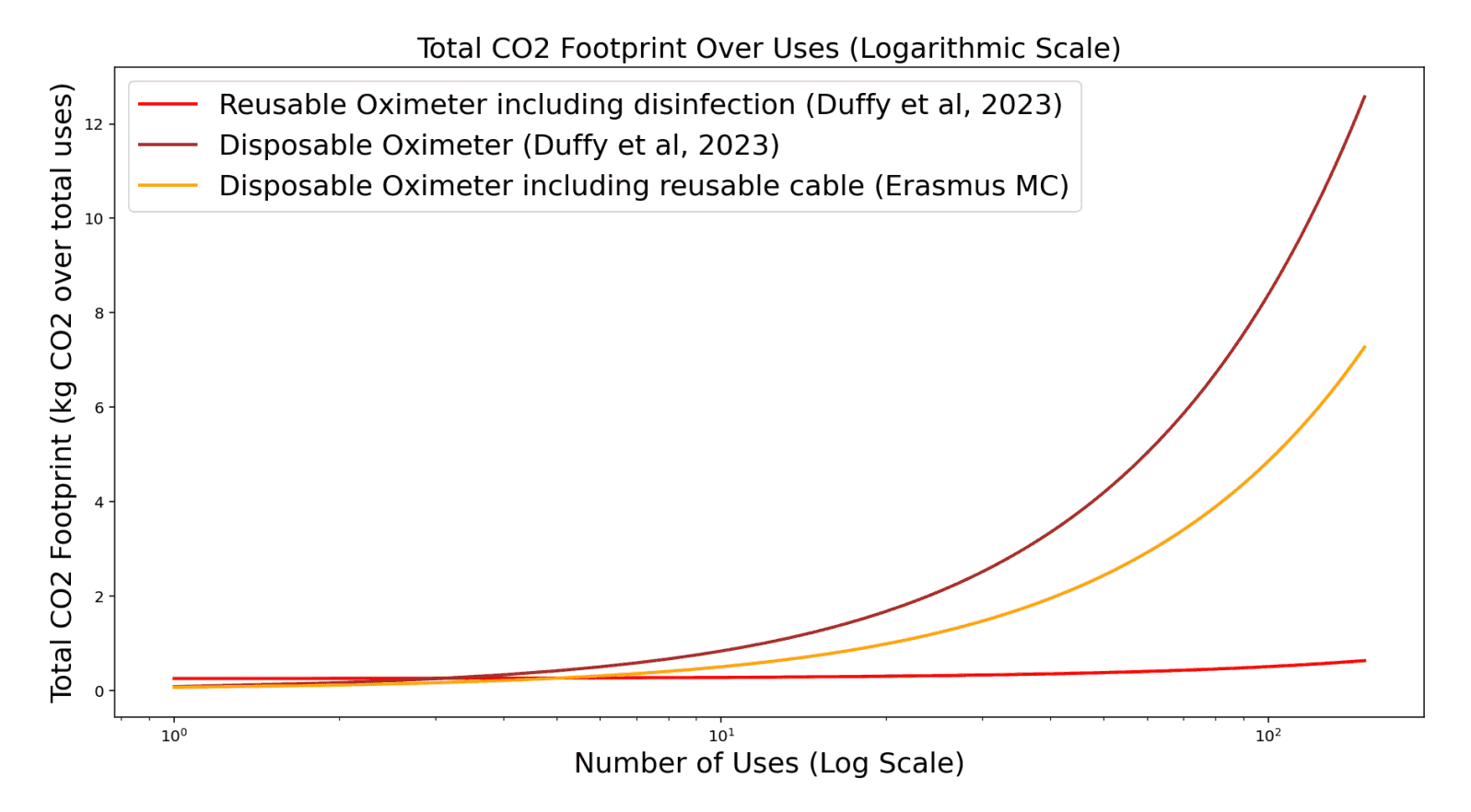
The baseline LCA found that an existing reusable sensor matched a disposable sensor’s emissions after 2.3 uses. The design challenge was to capture this benefit while improving handling and comfort.
WHAT STAFF NEED
Staff favored disposable sensors for accuracy and convenience. Reusable alternatives brought slippage, discomfort and disinfection demands. Movement, low perfusion, pigmentation and finger size also shaped the sensing brief.
WHY REUSE IS WORTH EXPLORING
The baseline LCA found that an existing reusable sensor matched a disposable sensor’s emissions after 2.3 uses. The design challenge was to capture this benefit while improving handling and comfort.

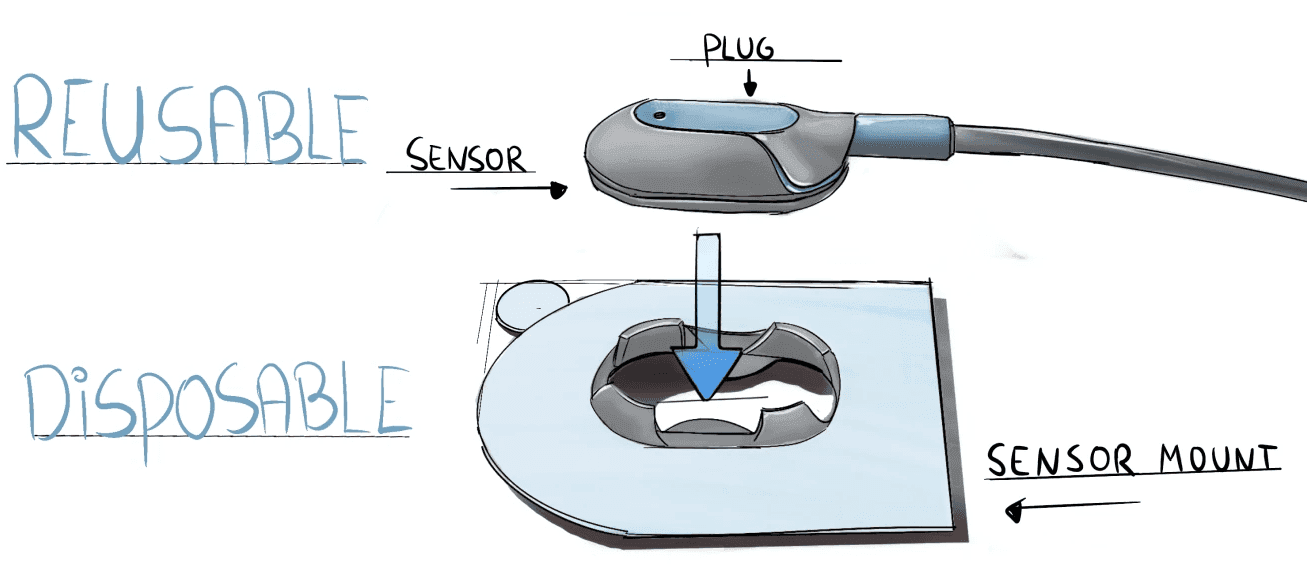
DISPOSABLE / REUSABLE SENSOR COMPARISON

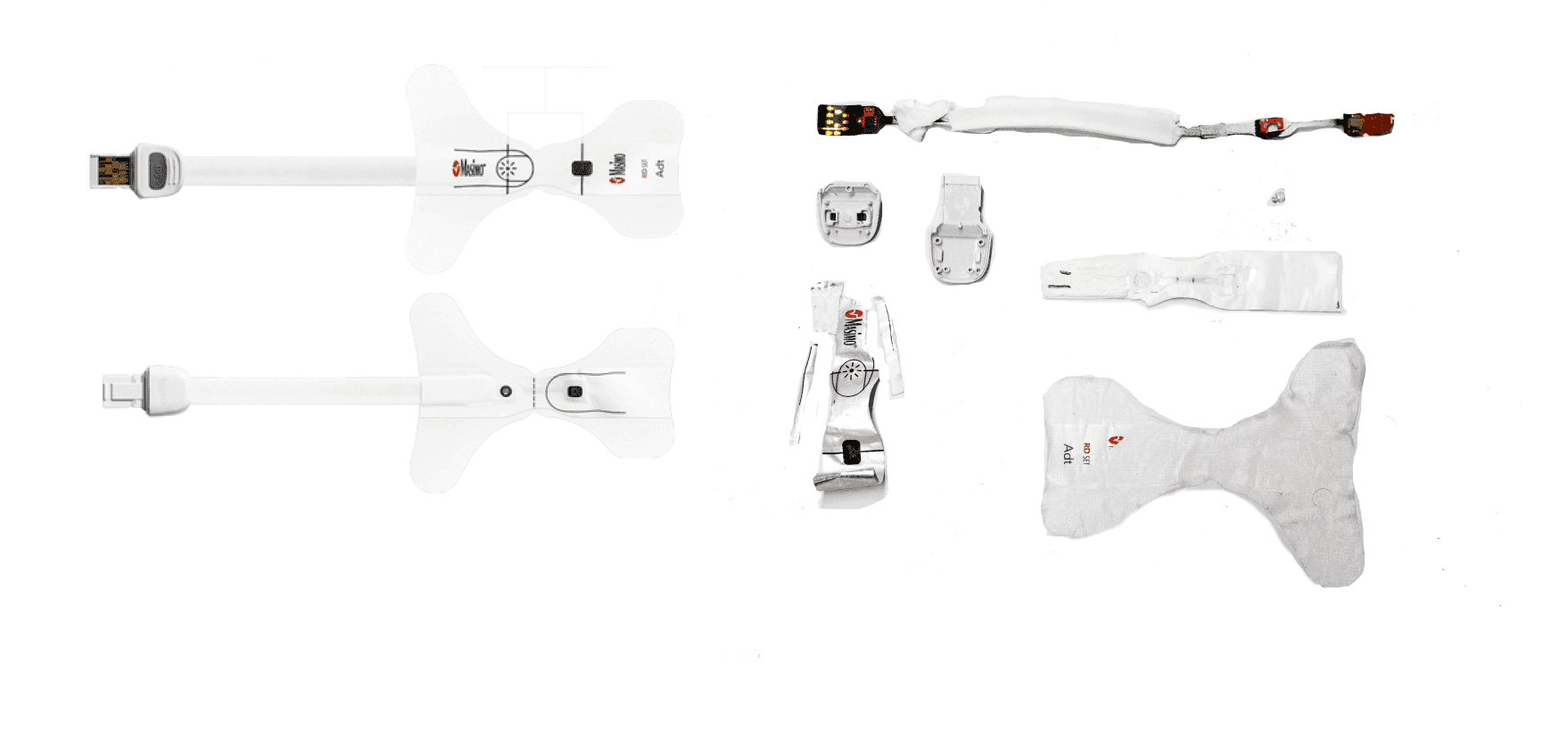
PRODUCT TEARDOWN / MASIMO OXIMETER

BASELINE LCA / EXISTING OXIMETERS
DISPOSABLE / REUSABLE SENSOR COMPARISON
PRODUCT TEARDOWN / MASIMO OXIMETER
BASELINE LCA / EXISTING OXIMETERS
02
/Inside the project
How was the concept chosen?
Research set the brief. Sketching explored the architecture. The placement study guided the wrist location.
02
/Inside the project
How was the concept chosen?
Research set the brief. Sketching explored the architecture. The placement study guided the wrist location.
RESEARCH / TWO PHASES, SIX AREAS
Starting with ICU use and adaptability to other hospital settings, context exploration led to six studies: sensing and wavelengths, environmental viability, circularity, ergonomic placement, sustainable materials, and nurse use.
ICU USE / DESIGN REQUIREMENTS
DESIGN REQUIREMENT
<0.0483 kg
CO₂ per use
Sustainability target
DESIGN REQUIREMENT
15–25 s
Attach or detach
Handling target
DESIGN REQUIREMENT
5 wavelengths
Across skin tones
Inclusivity requirement
DESIGN REQUIREMENT
600 uses
Plug and sensor
Durability target
ICU USE / DESIGN REQUIREMENTS
DESIGN REQUIREMENT
<0.0483 kg
CO₂ per use
Sustainability target
DESIGN REQUIREMENT
15–25 s
Attach or detach
Handling target
DESIGN REQUIREMENT
5 wavelengths
Across skin tones
Inclusivity requirement
DESIGN REQUIREMENT
600 uses
Plug and sensor
Durability target

Sketching alternatives for placement, attachment and component separation.

Selected architecture: reusable electronics and a replaceable mount.
Sketching alternatives for placement, attachment and component separation.
Selected architecture: reusable electronics and a replaceable mount.
THE SELECTED CONCEPT
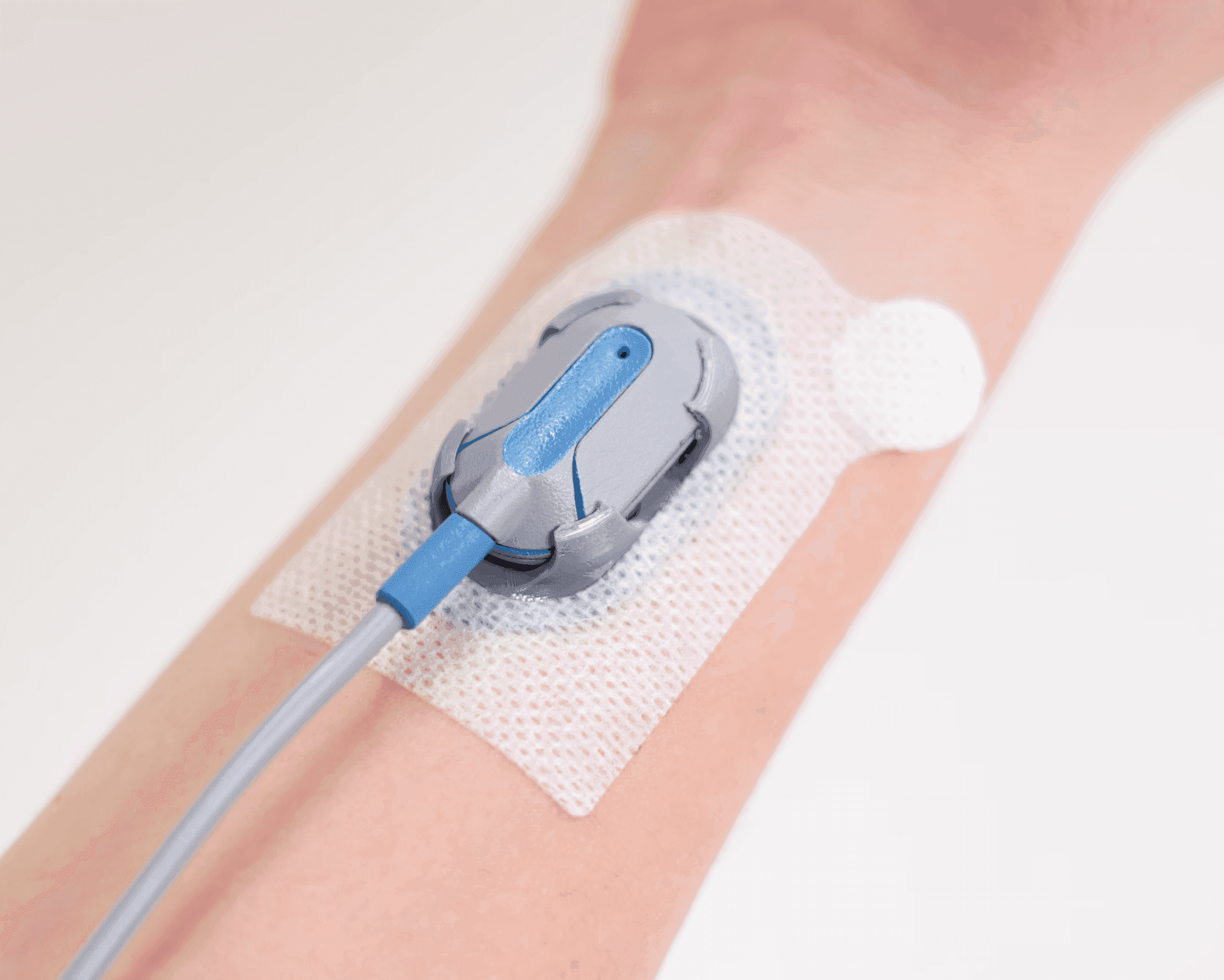
A symmetric wrist device works on either arm. An adhesive mount secures the sensor; a sliding connector and pin-tool release support retention, repair and replacement.
The wrist concept developed from the sketch studies.
THE SELECTED CONCEPT
A symmetric wrist device works on either arm. An adhesive mount secures the sensor; a sliding connector and pin-tool release support retention, repair and replacement.
The wrist concept developed from the sketch studies.
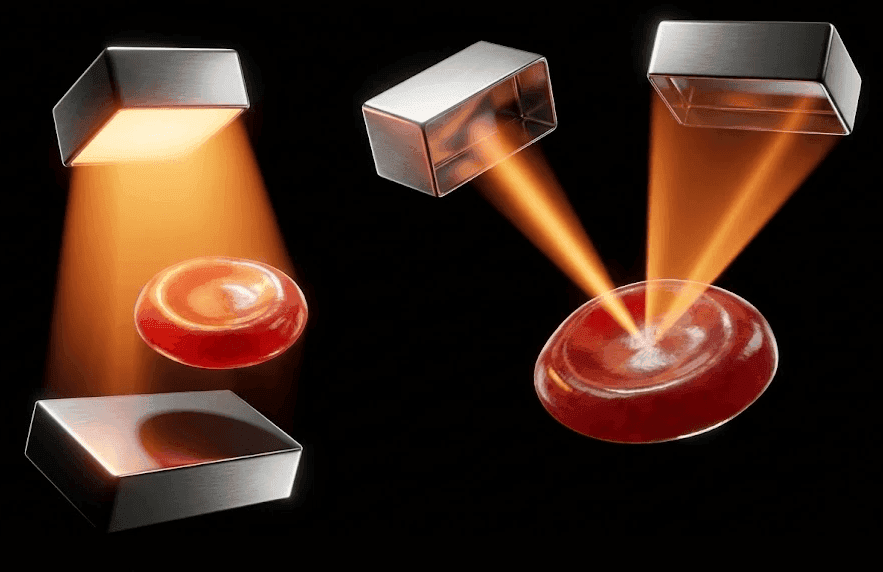
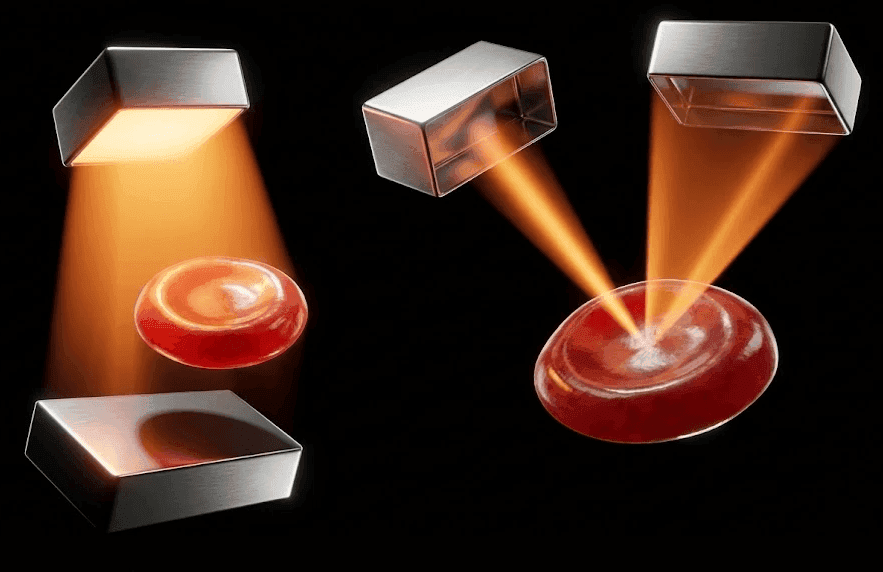
Transmissive and reflective optical paths: the sensing arrangements explored.
WHY REFLECTIVE SENSING?
The wrist scored highest in the placement trade study: 31 points for accessibility, indexability and comfort. Reflective sensing over the radial artery supports this location and keeps electronics out of the disposable mount.
Transmissive and reflective optical paths: the sensing arrangements explored.
WHY REFLECTIVE SENSING?
The wrist scored highest in the placement trade study: 31 points for accessibility, indexability and comfort. Reflective sensing over the radial artery supports this location and keeps electronics out of the disposable mount.
03
/Inside the project
How do the parts work?
Separate replacement cycles informed the circularity strategy, materials and assembly.
03
/Inside the project
How do the parts work?
Separate replacement cycles informed the circularity strategy, materials and assembly.
/Assembly
Three parts, two replacement cycles
Keep the plug and sensing electronics. Replace the skin-contact mount.
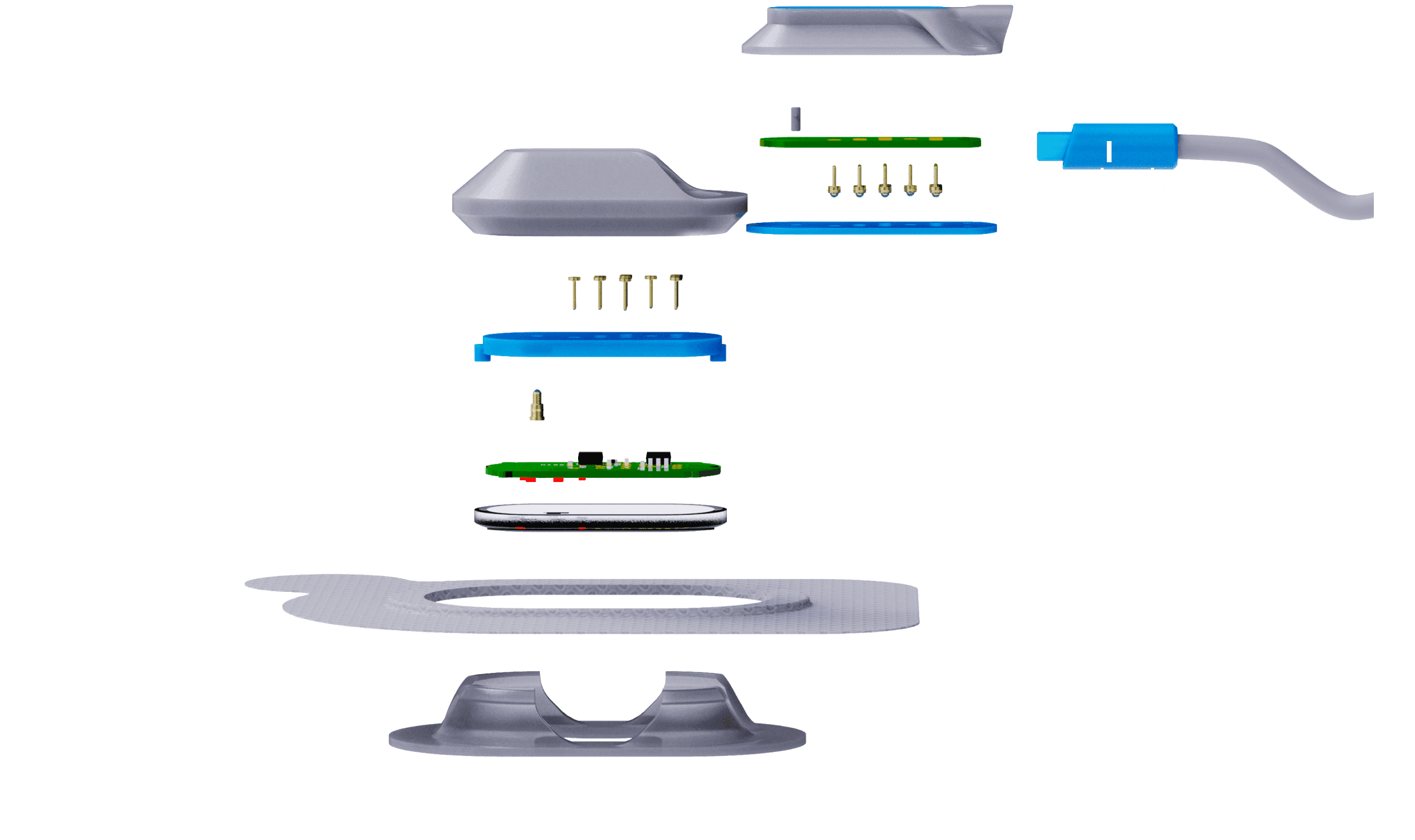
PRODUCT ARCHITECTURE
The plug and sensor are reused; the adhesive mount is replaced. Reflective sensing keeps the electronics out of the consumable mount. Sliding engagement and a pin release let the components separate.
PRODUCT ANATOMY / ORIGINAL EXPLODED VIEW
PRODUCT ARCHITECTURE
The plug and sensor are reused; the adhesive mount is replaced. Reflective sensing keeps the electronics out of the consumable mount. Sliding engagement and a pin release let the components separate.
PRODUCT ANATOMY / ORIGINAL EXPLODED VIEW

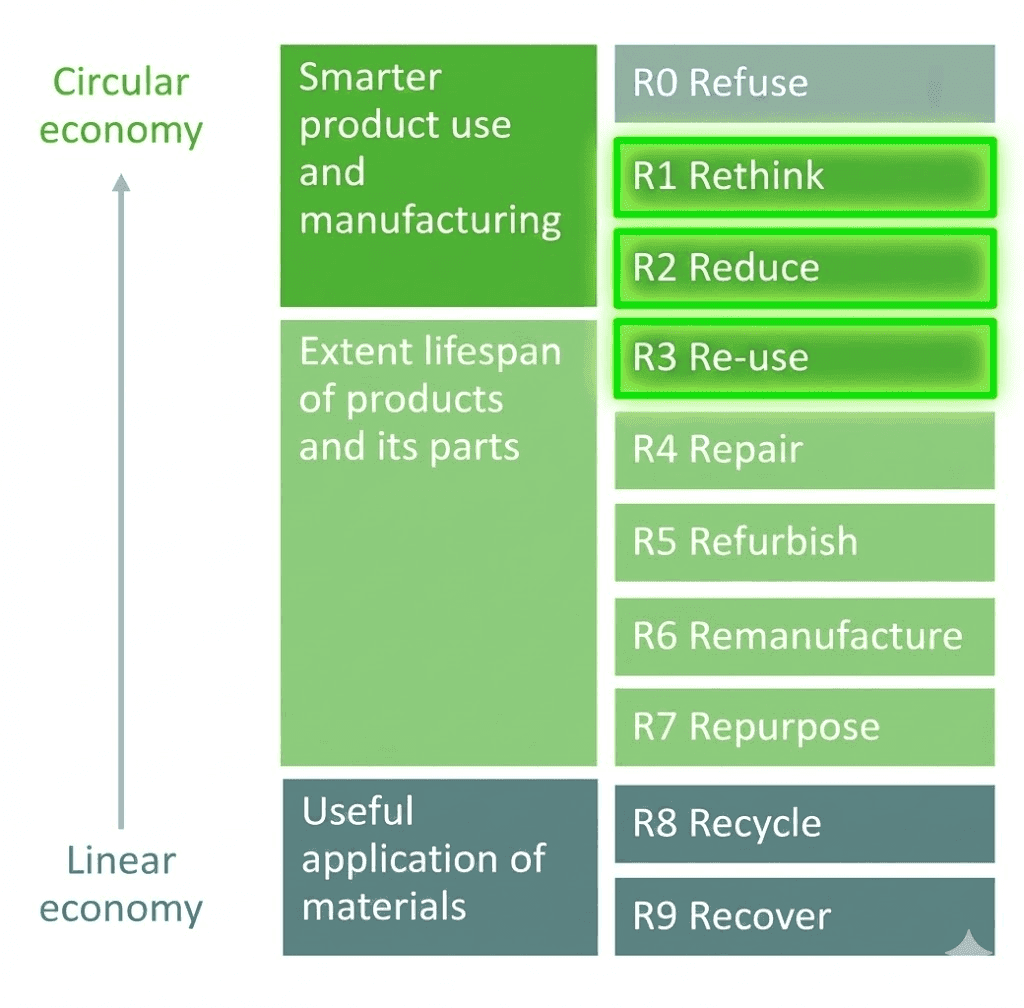
The circularity framework behind the R1–R3 strategy.
RETHINK / REDUCE / REUSE
The team prioritized rethink, reduce and reuse (R1–R3), addressing packaging and transport as well as the product. Modularity, cleanability and disassembly became the design guidelines.
The circularity framework behind the R1–R3 strategy.
RETHINK / REDUCE / REUSE
The team prioritized rethink, reduce and reuse (R1–R3), addressing packaging and transport as well as the product. Modularity, cleanability and disassembly became the design guidelines.

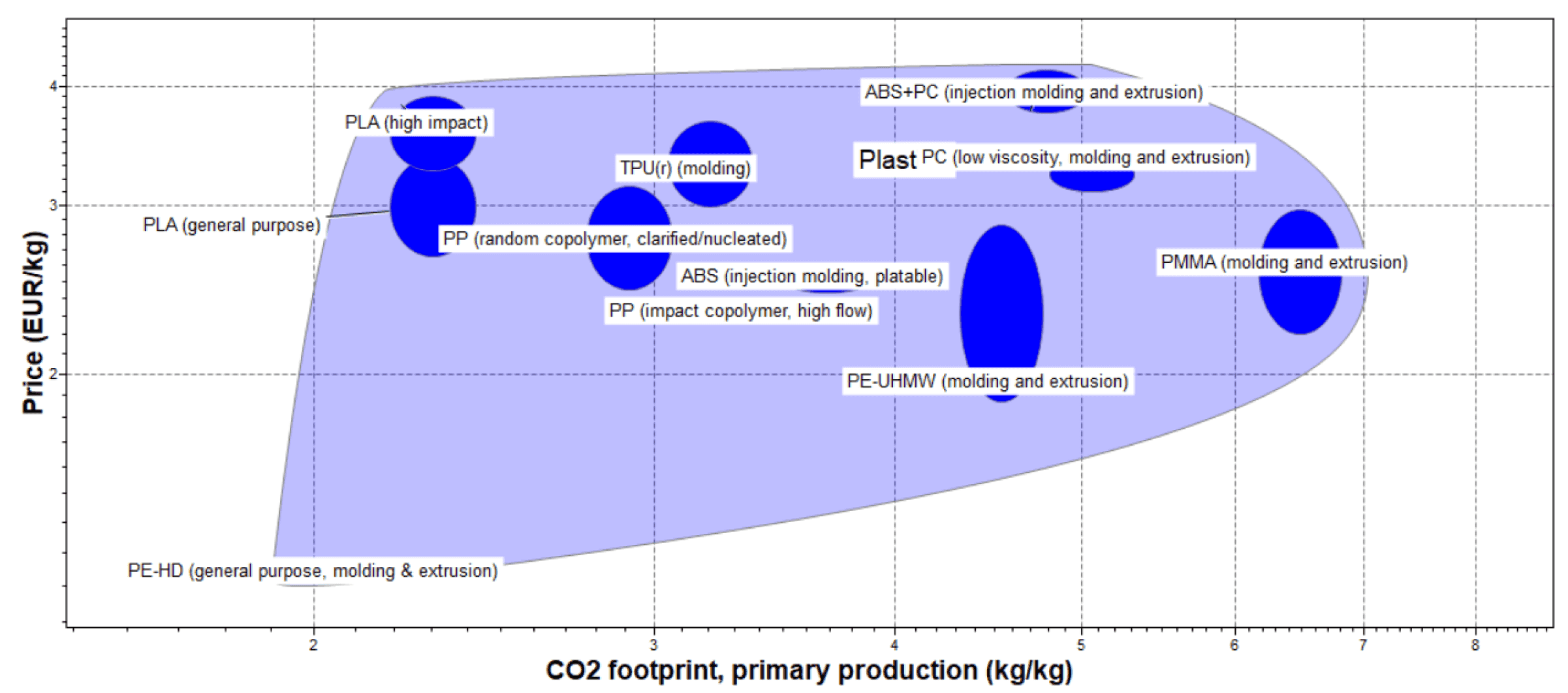
Ansys Granta material comparisons informed the component selections.
MATERIALS / MATCH THE ROLE
ABS housing: toughness and impact resistance. Polycarbonate cover: optical clarity. HDPE mount: flexibility, durability and lower carbon footprint. The material study balanced performance, sustainability and cost.
Ansys Granta material comparisons informed the component selections.
MATERIALS / MATCH THE ROLE
ABS housing: toughness and impact resistance. Polycarbonate cover: optical clarity. HDPE mount: flexibility, durability and lower carbon footprint. The material study balanced performance, sustainability and cost.
ENGINEERING THE ASSEMBLY
The reusable plug, sensing electronics and replaceable mount have distinct roles. The exploded view above explains the layers; this technical drawing records the assembly in more detail.
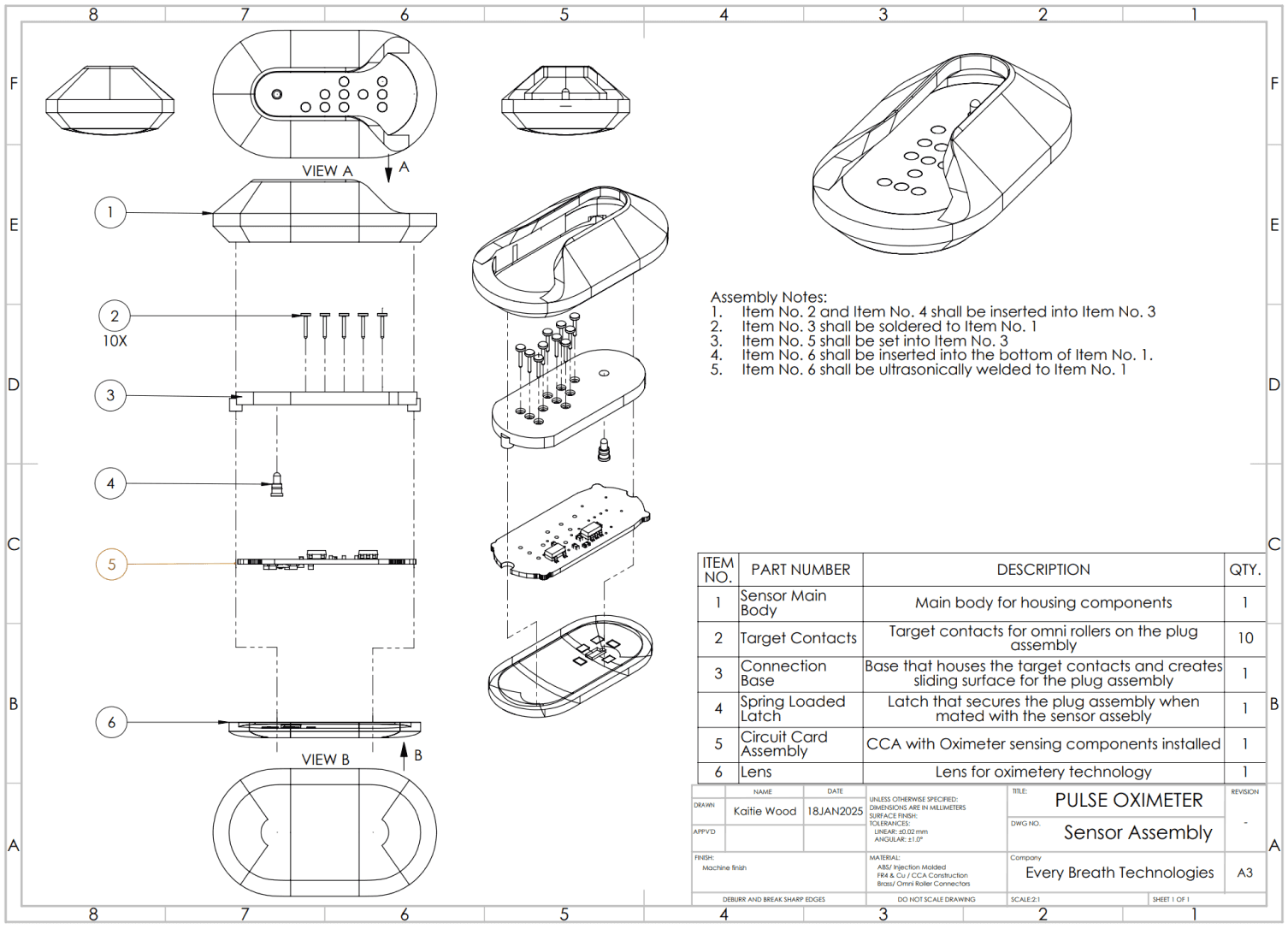
Technical drawing of the modular assembly.
ENGINEERING THE ASSEMBLY
The reusable plug, sensing electronics and replaceable mount have distinct roles. The exploded view above explains the layers; this technical drawing records the assembly in more detail.
Technical drawing of the modular assembly.
04
/Inside the project
How is it used?
Follow the attachment sequence, then see the physical prototype in motion.
04
/Inside the project
How is it used?
Follow the attachment sequence, then see the physical prototype in motion.
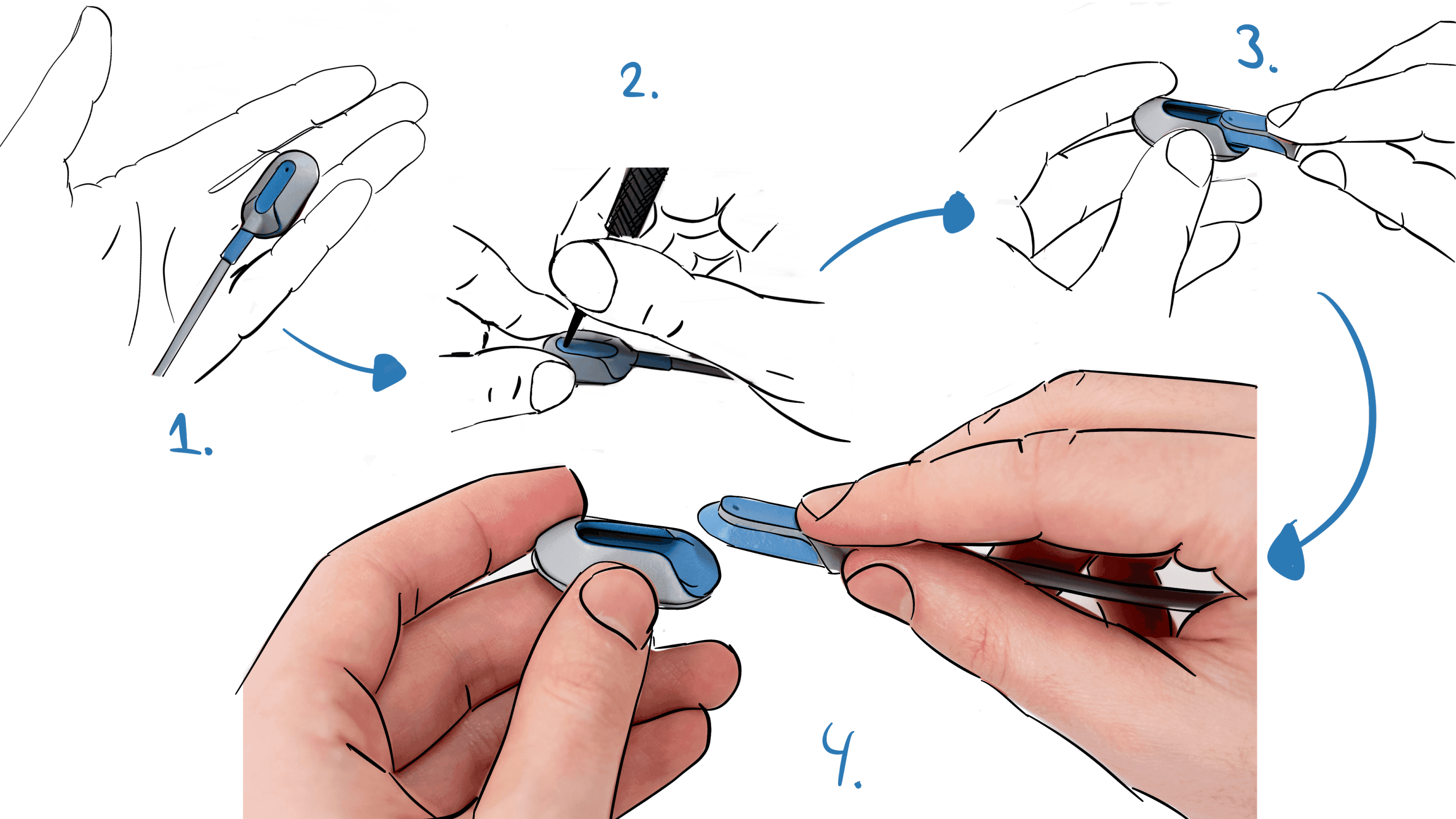
ATTACHMENT SEQUENCE
1. Place the adhesive mount on the wrist. 2. Connect the cable to the sensor. 3. Attach the sensor to the mount. Reflective sensing keeps the disposable part free of electronics.
Connection and disassembly of the three components.

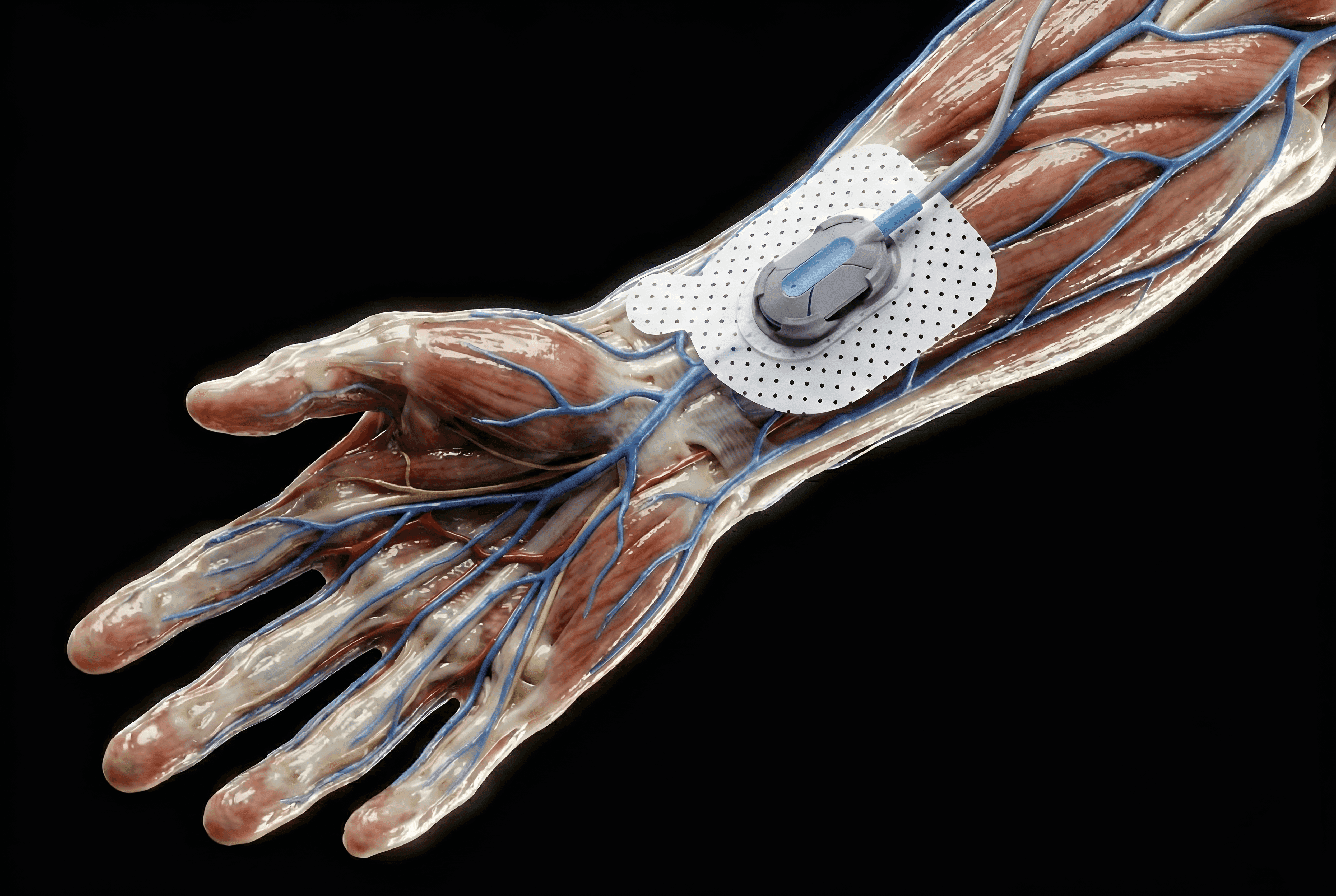
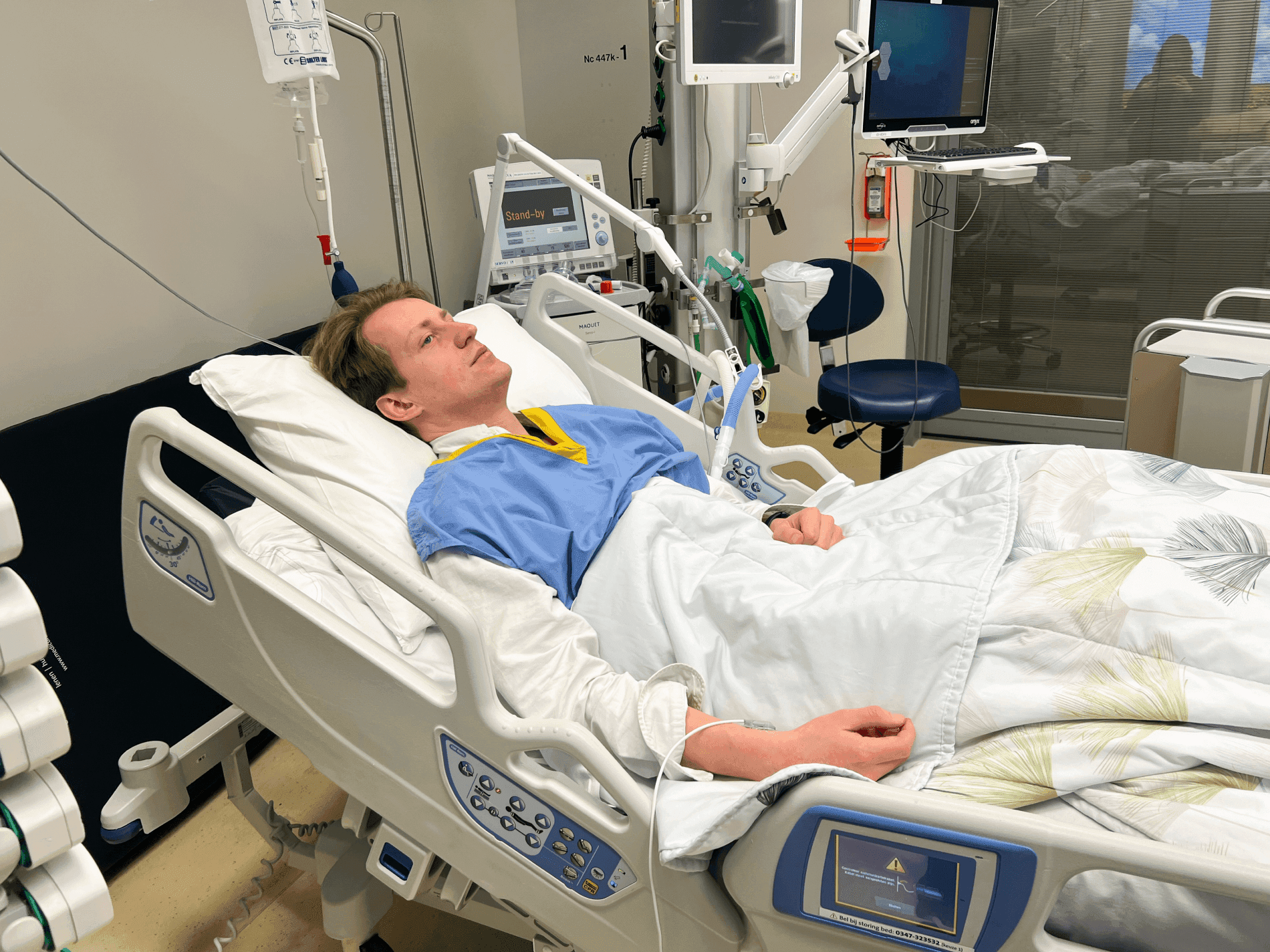
The intended ICU setting, illustrated as a concept scenario.
Connection and disassembly of the three components.
The intended ICU setting, illustrated as a concept scenario.
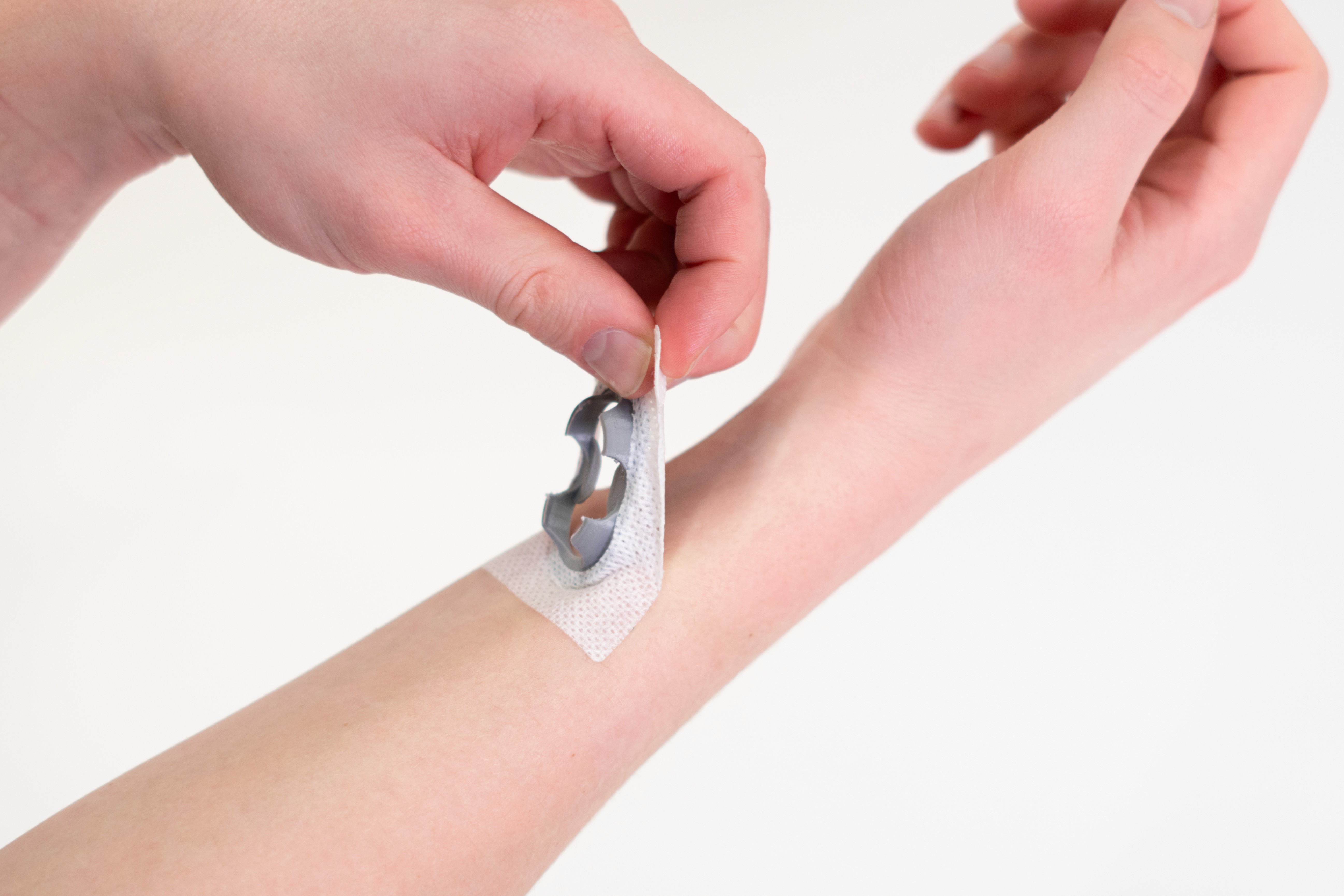
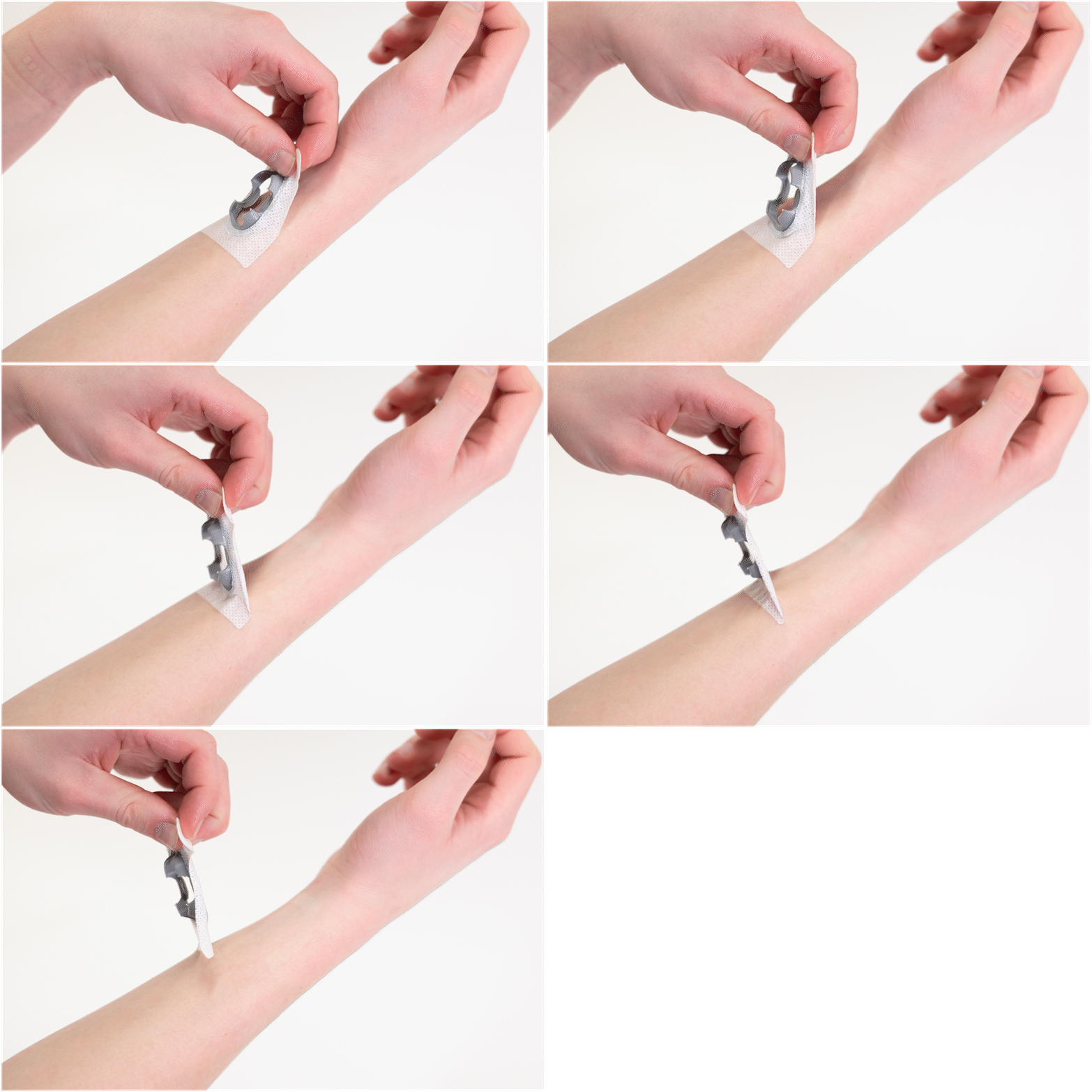
Adhesive removal
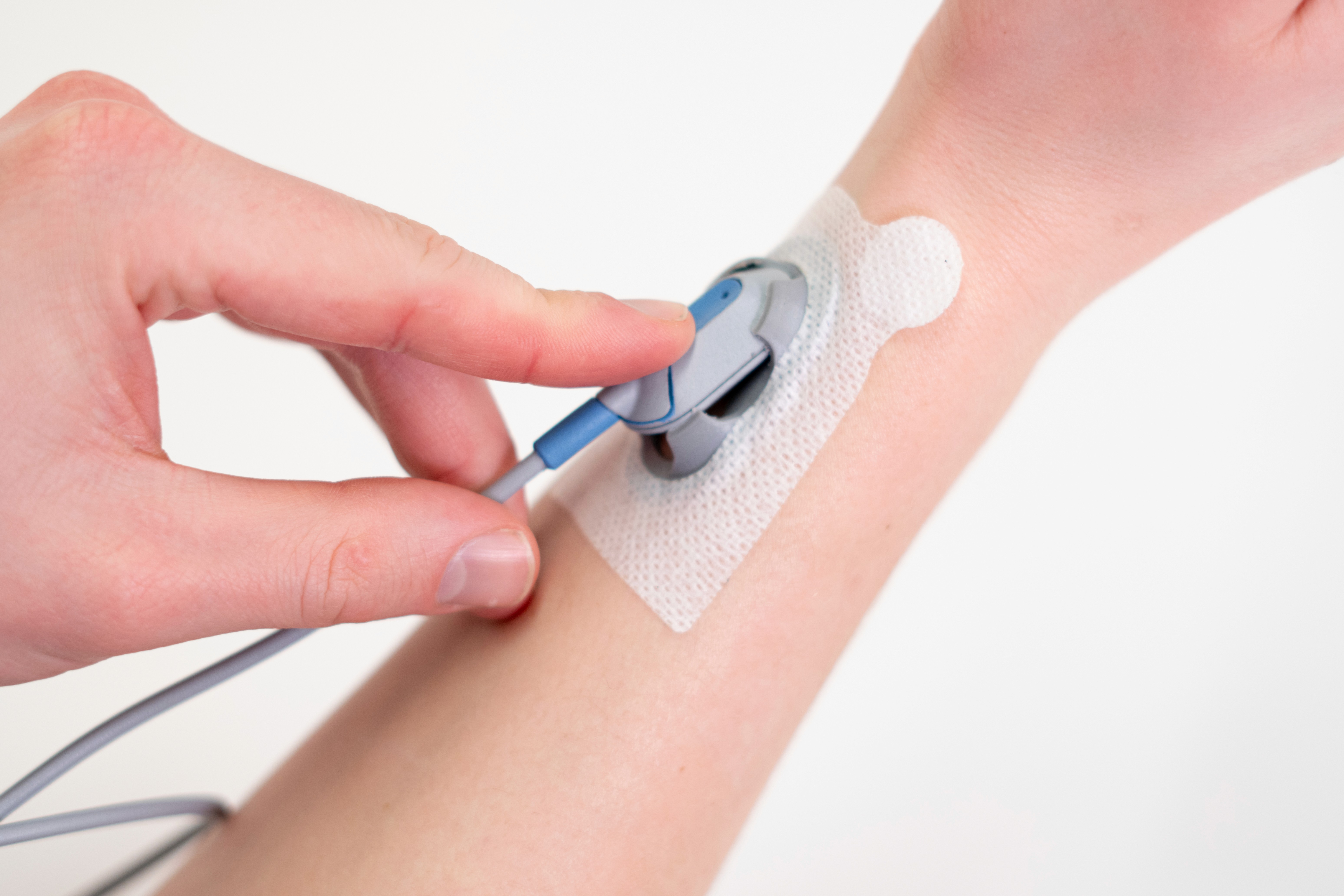
Physical attachment prototype
Prototype detail
Adhesive removal
Physical attachment prototype
Prototype detail
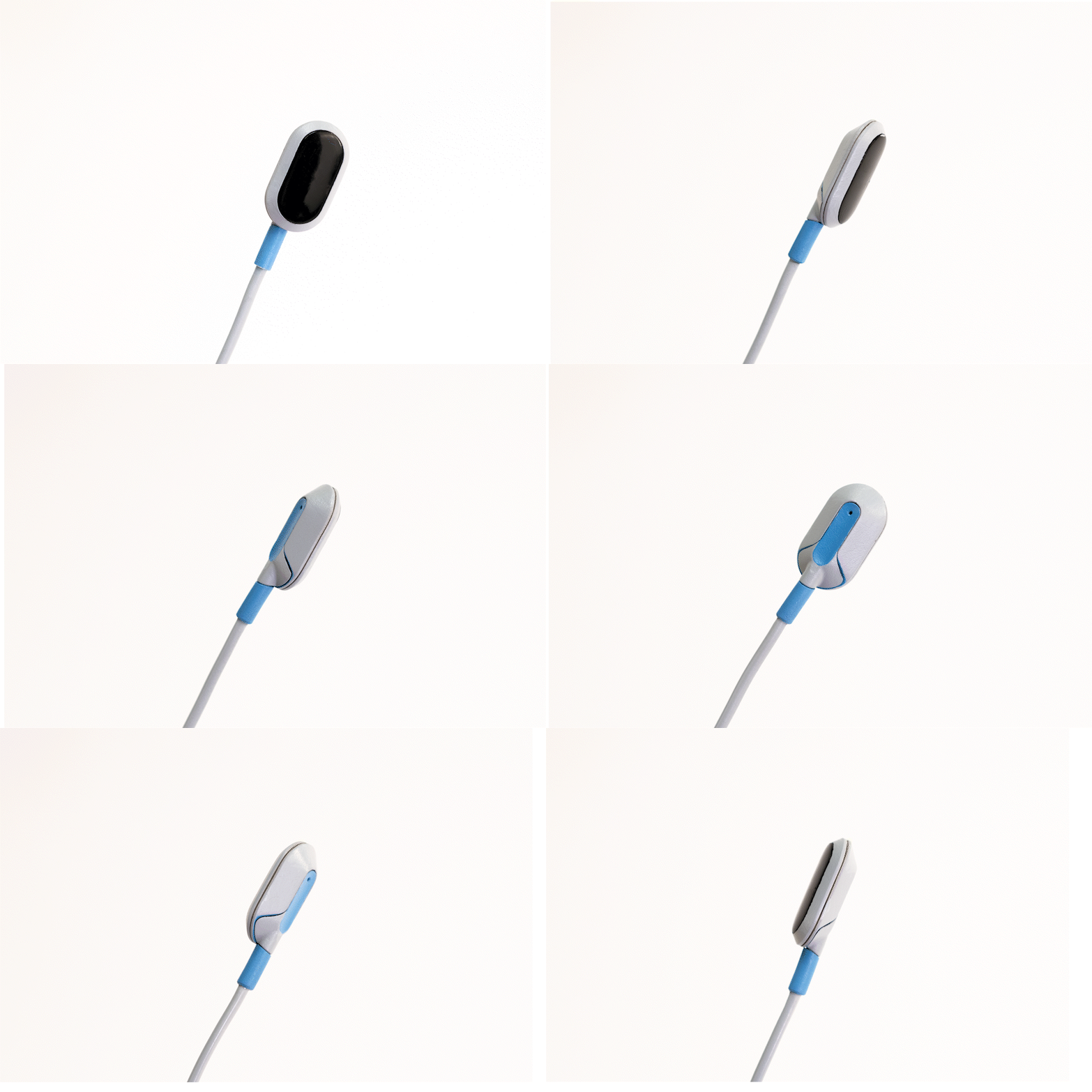
PROTOTYPE / TURNING THE ATTACHMENT

PROTOTYPE / PULL-OFF AND REMOVAL
PROTOTYPE / TURNING THE ATTACHMENT
PROTOTYPE / PULL-OFF AND REMOVAL
05
/Inside the project
What did the study find?
Lifecycle analysis supports the reuse strategy; the prototype makes the product architecture tangible.
05
/Inside the project
What did the study find?
Lifecycle analysis supports the reuse strategy; the prototype makes the product architecture tangible.

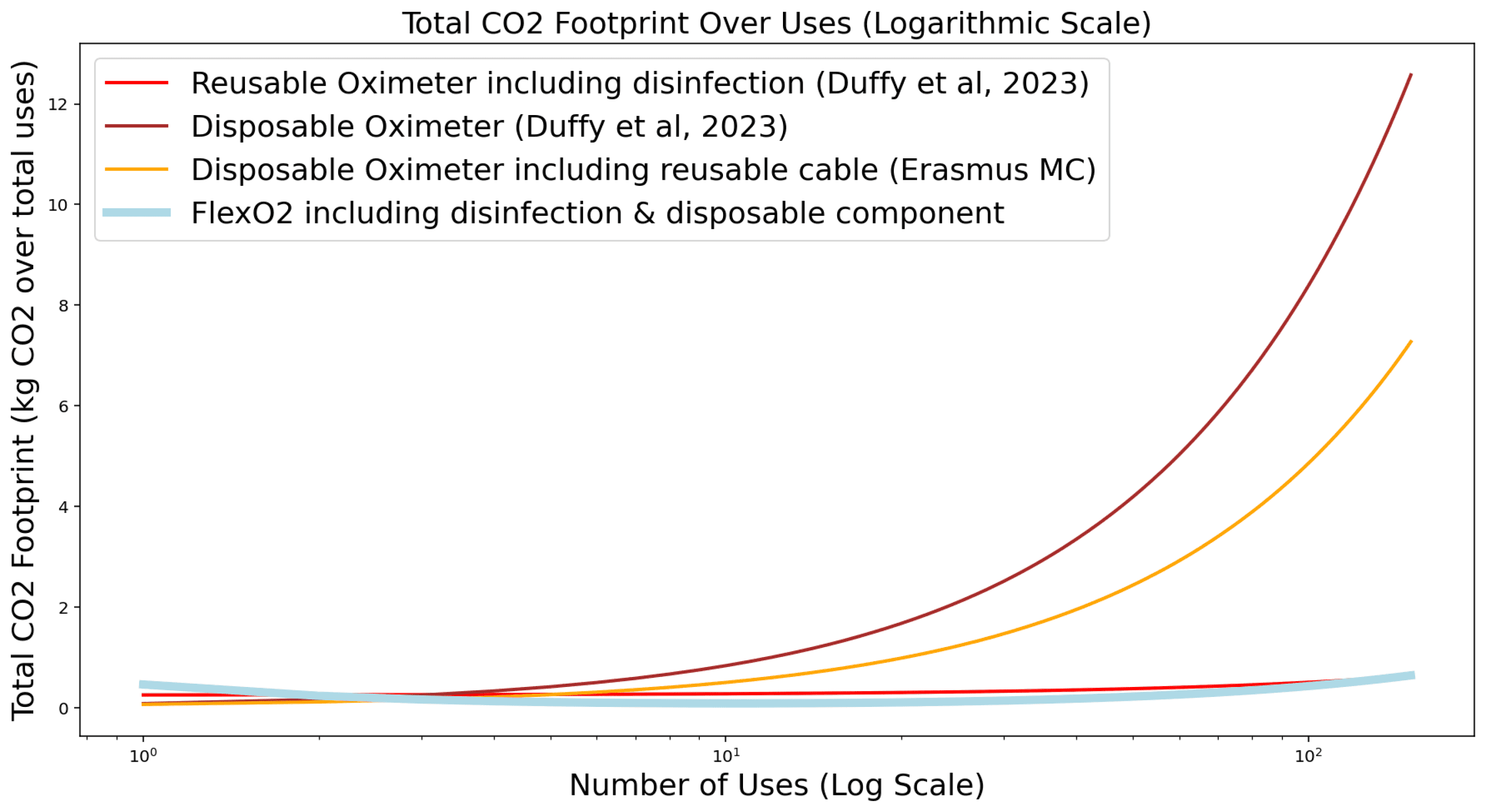
Final lifecycle comparison: Flex O2, disposable and reusable alternatives.
MODELLED LIFECYCLE RESULT
Flex O2 began with a higher initial footprint: 0.46 kg CO₂. Over the modelled 600-use scenario, its per-use footprint fell below disposable sensors and became comparable to existing reusable oximeters. The study concluded that the design met its sustainability requirement relative to the disposable product.
Final lifecycle comparison: Flex O2, disposable and reusable alternatives.
MODELLED LIFECYCLE RESULT
Flex O2 began with a higher initial footprint: 0.46 kg CO₂. Over the modelled 600-use scenario, its per-use footprint fell below disposable sensors and became comparable to existing reusable oximeters. The study concluded that the design met its sustainability requirement relative to the disposable product.
MY CONTRIBUTION
I contributed research, materials work, 3D modelling, prototyping and reporting. Together, the team translated the studies into a modular wrist concept and physical attachment prototype. The main design contribution is separating durable sensing hardware from the replaceable skin interface.
PROJECT EVIDENCE / 22 ORIGINAL ASSETS
Context and research (8)

Design development (8)

Prototype and application (6)