FLEX O2
.Collaborative PROJECT

Category:
Product Desing
Collaborative Project
Read:
11 mins
Tag:
Oximeter, Sustainability, Reusable, Med-design
Completion Date:
October, 2025
GOAL
To design a more eco-friendly pulse oximeter without sacrificing usability or inclusivity
.THE PROBLEM
THE PROBLEM
A Disposable Crisis
The Erasmus MC hospital faces a significant Scope 3 carbon footprint due to the extensive use of disposable pulse oximeters. The short lifespan of these single-use sensors makes them the second most impactful waste stream of medical facilities, contributing to an approximated impact of 515,000 kg CO₂ per year across Dutch medical centers
.Research
Research
Contextual Findings
Current reusable oximeters suffer from issues like slippage, reduced comfort, and require disinfection, causing medical staff to favor disposable sensors for accuracy and convenience.
Life Cycle Assessment (LCA) research shows that a reusable oximeter only needs to be used 2.3 times before matching the emissions of a single disposable oximeter, strongly suggesting that pursuing a reusable solution is the most beneficial approach for sustainability.
Existing oximeter designs also suffer from human factor shortcomings, including inaccuracy due to patient movement, low perfusion, and variations caused by skin pigmentation or finger size
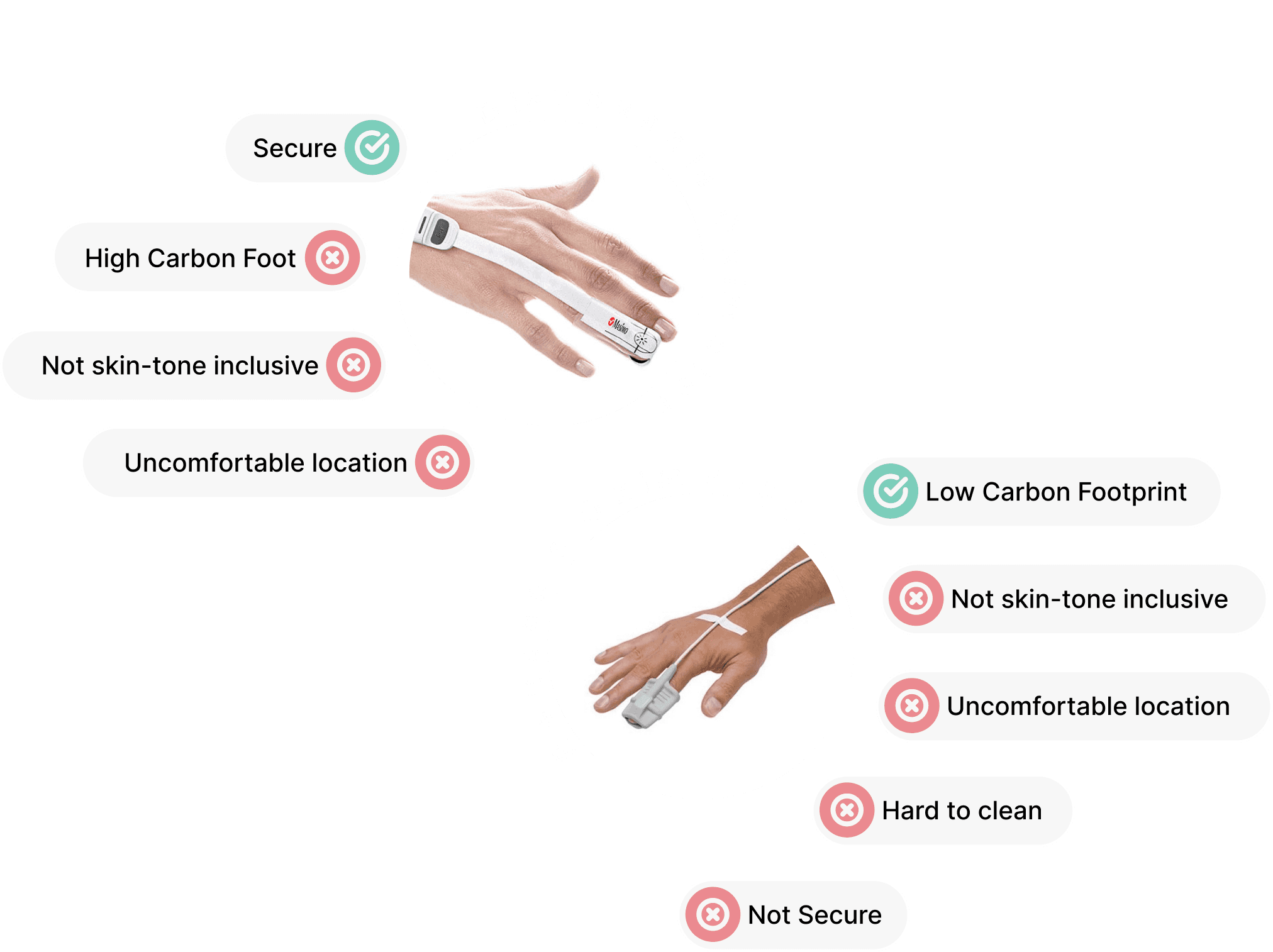
A Comparison of Disposable and Reusable Oximeter
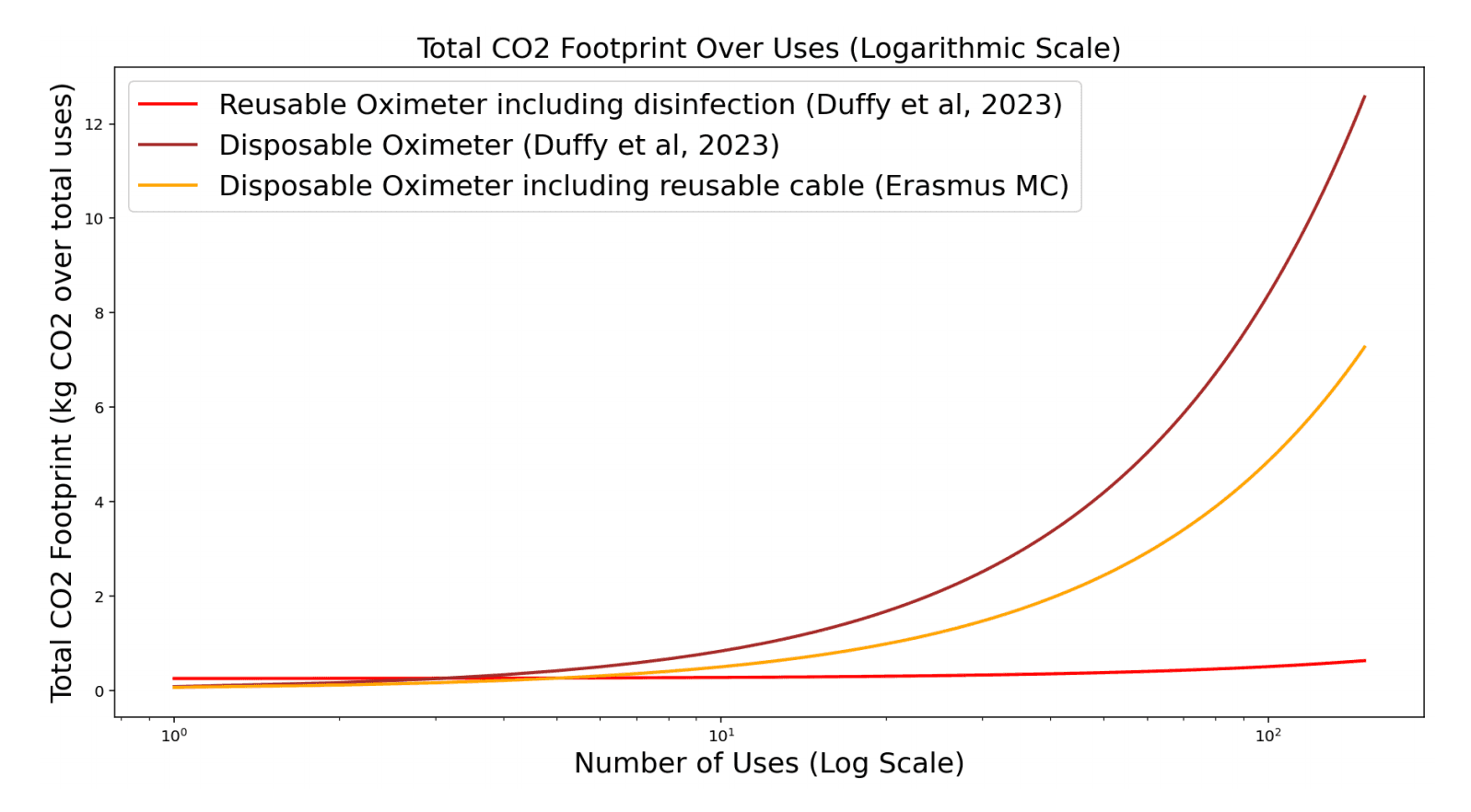
LCA Assessment of the current Oximeter
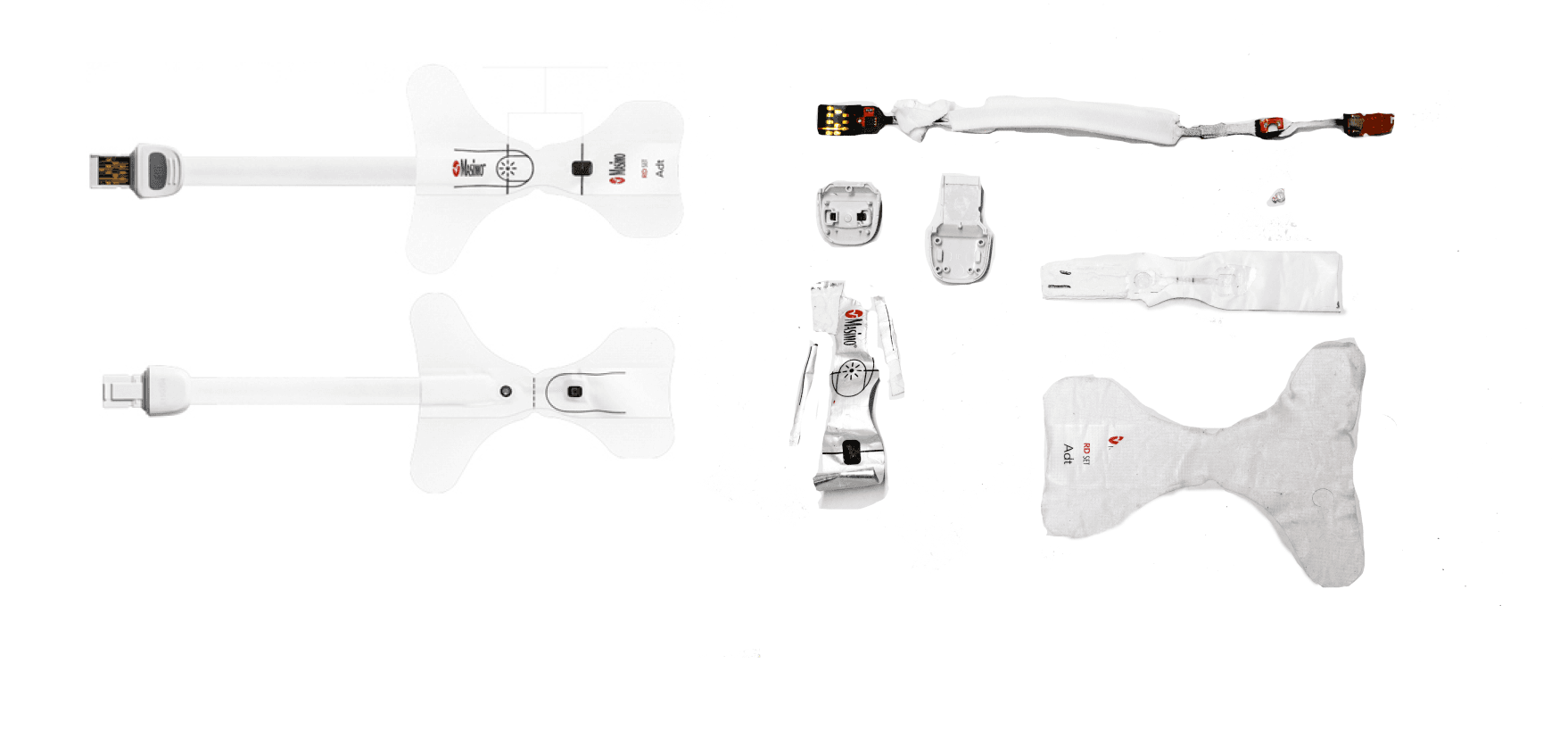
Product Teardown of the current Masimo oximeter
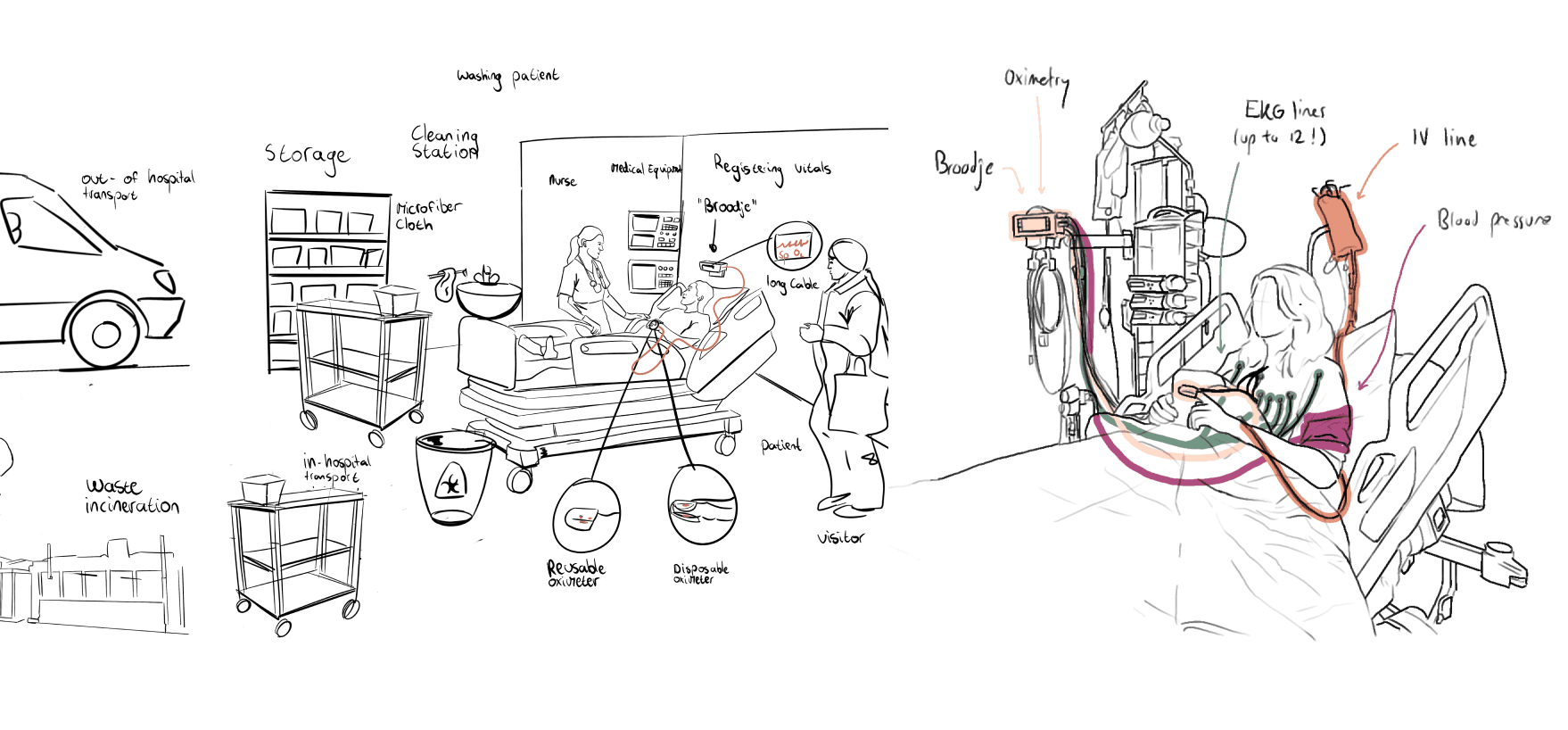
Sketch Illustrating the current scenario
In-Depth Research Areas
The project involved two phases of research, starting with exploratory context exploration, followed by in-depth individual research into six key topics: optimal measurement techniques (wavelengths, placement), environmental impact viability, R9 strategy integration, ergonomic placement, sustainable material alternatives, and user research with nurses
Key Strategic Direction
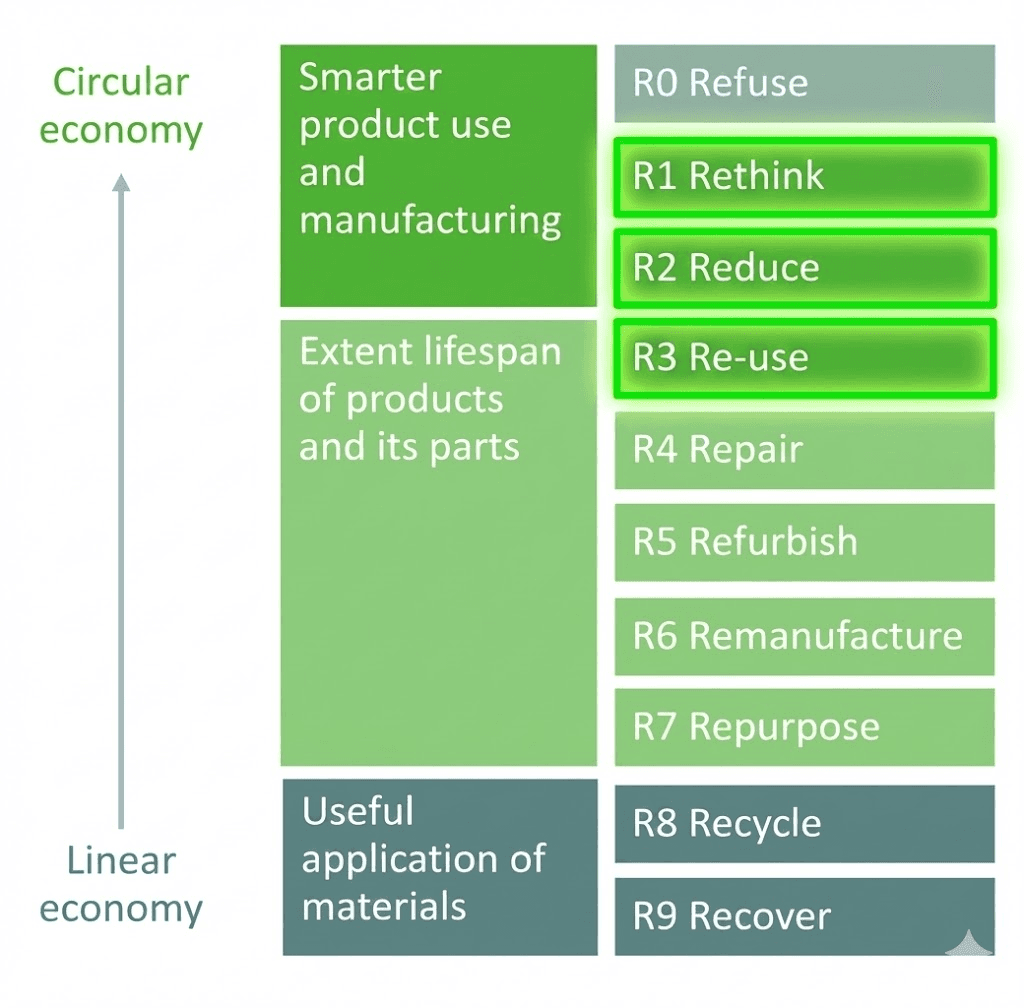
The team chose to focus on Rethink, Reduce, and Reuse (R1-R3) strategies, as opposed to competitors' focus on Remanufacture and Recycle (R5-R9), arguing that the former yield greater long-term sustainability benefits, especially by addressing transportation and packaging footprints.
The design guidelines included promoting a modular design, ensuring cleanability, and designing for disassembly.
Scope and Requirements: The Flex-O₂ Oximeter was scoped for ICU adoption but adaptable to other hospital environments, prioritizing sustainability, patient comfort, and accuracy.
• Sustainability Goal (r1.1.1): Achieve a carbon footprint below 0.0483 kg CO₂ per use.
• Performance Goal (r3.1.3): Attach or detach the device within 15-25 seconds.
• Accuracy Goal (r3.8.3): Provide precise readings for all skin tones using five wavelengths.
• Durability Goal (r3.1.2): Reusable parts (sensor/plug) should be designed to last up to 600 uses
.Solution
THE SOLUTION
Concept Development
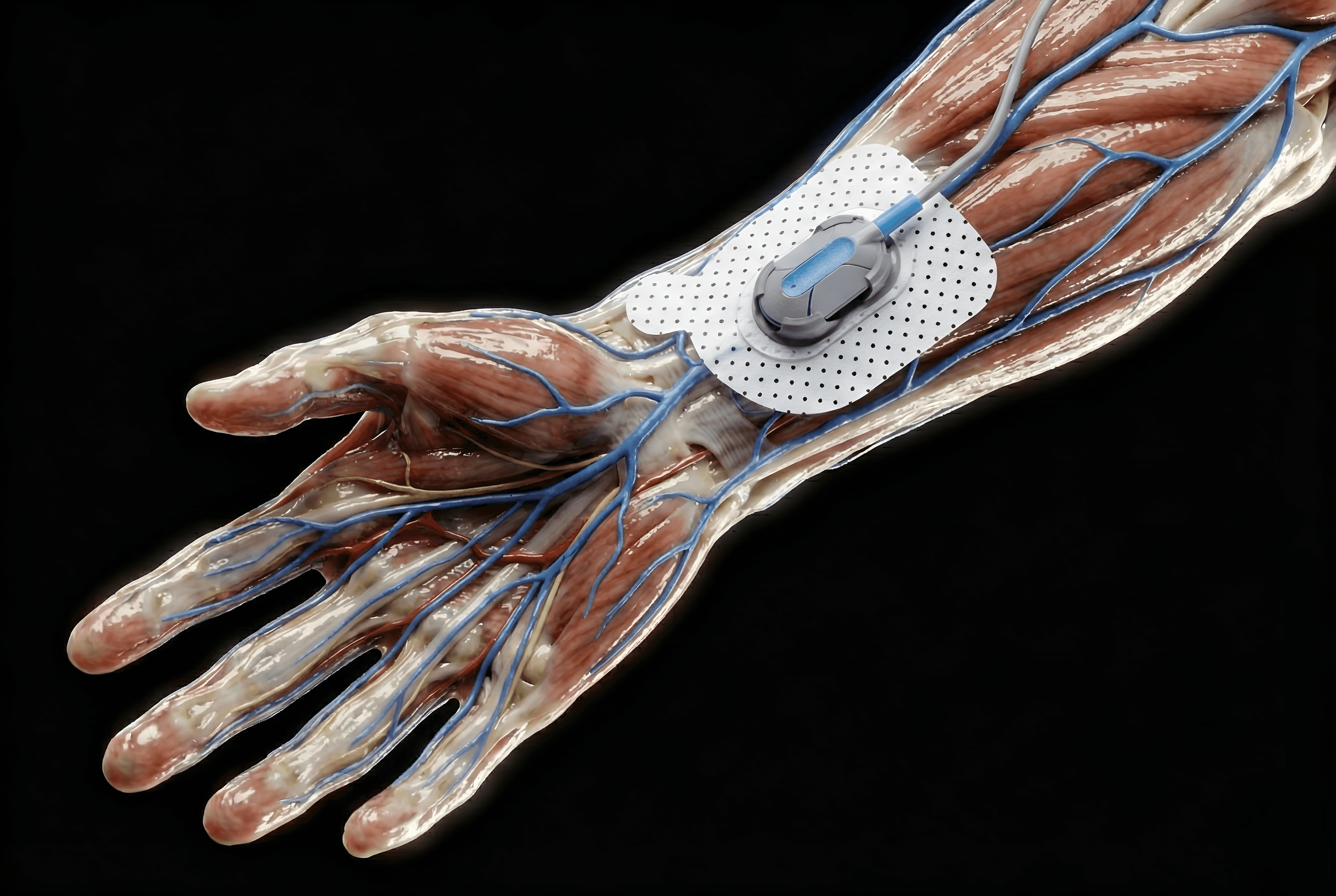
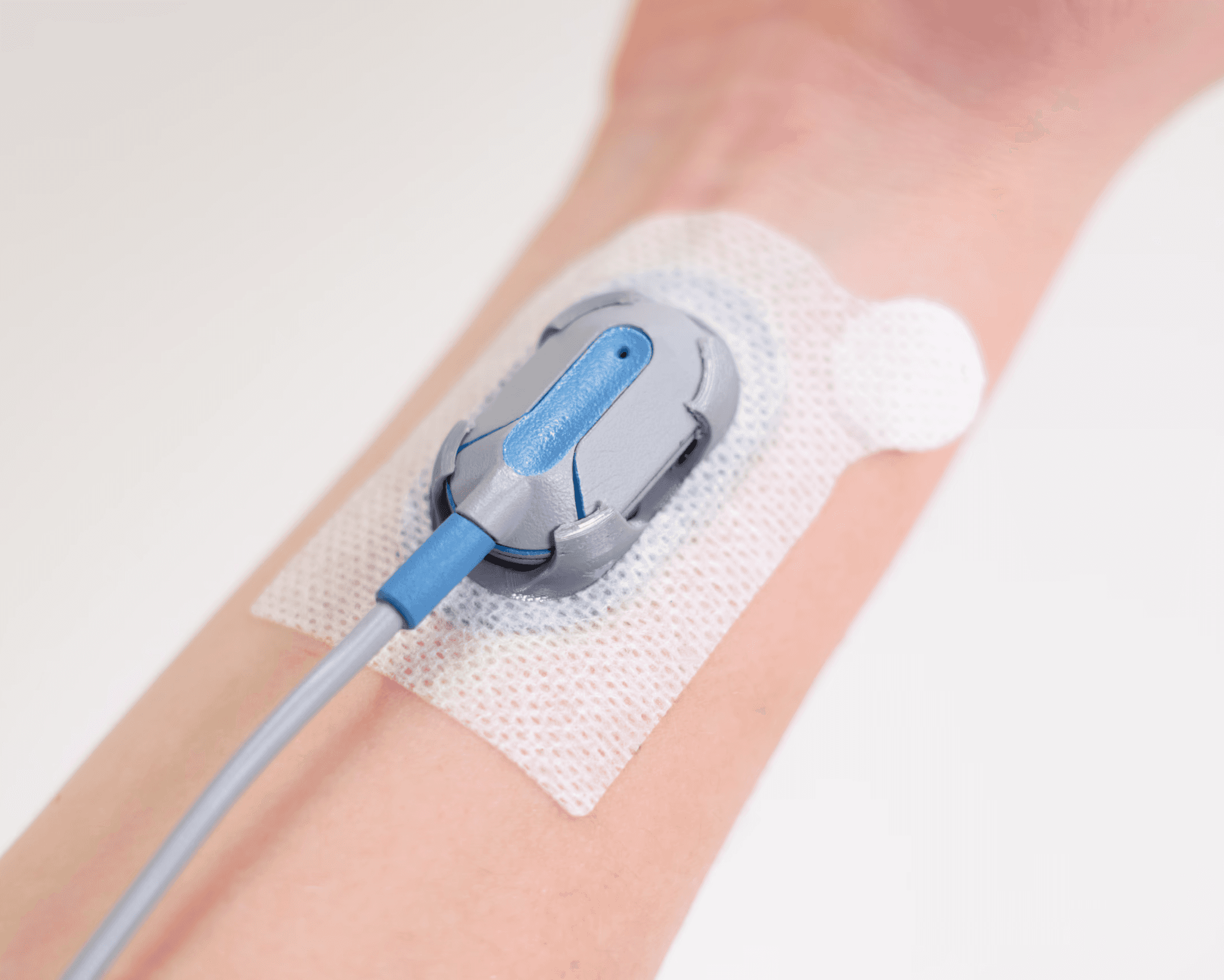
Core Concept: The Flex-O₂ is a modular device utilizing reflective oximetry positioned on the wrist, specifically over the radial artery.

Concept Ideation Canvas
Concept Details
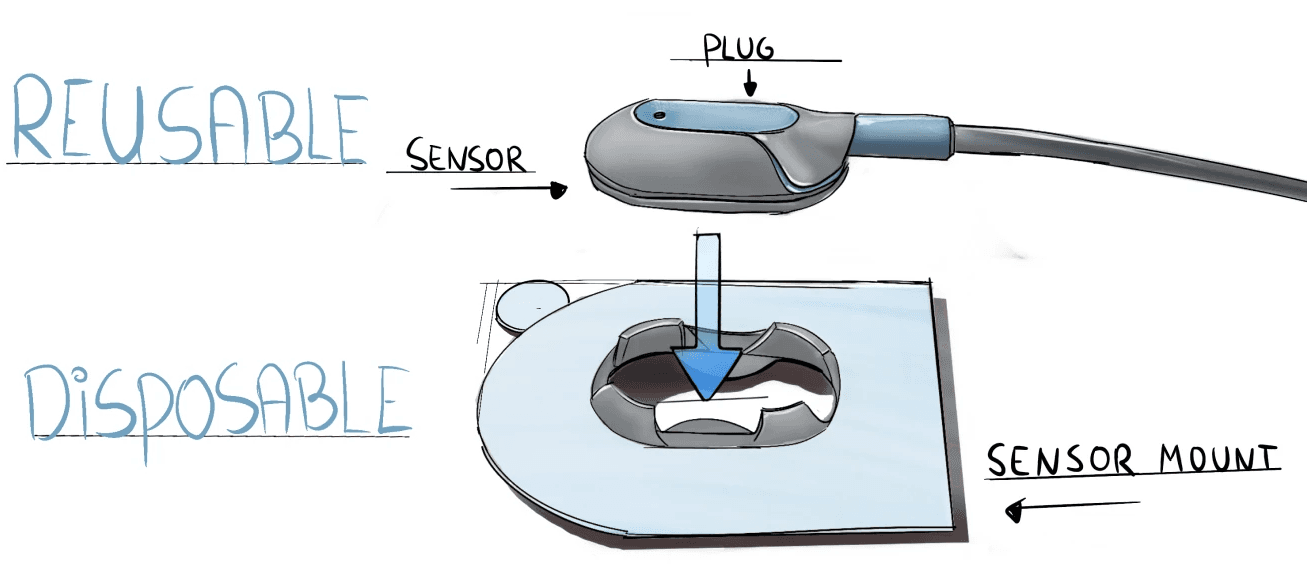
• Modularity: The system is split into three main parts: a reusable Plug (attached to the cable), a reusable Sensor (containing the electronics), and a disposable Sensor Mount (skin connection).
• Placement Justification: The wrist location scored highest in a trade study (31 points) for accessibility, indexability, and patient comfort. Reflective oximetry was chosen because it allows for more versatile placement options compared to transmissive oximetry.
• Usability Features: The sensor mount uses a disposable adhesive sticker for secure attachment. The reusable plug attaches to the sensor via a sliding action and is designed to be released only by a simple pin tool, preventing accidental detachment while still being easily replaced for repair or maintenance. The device is symmetrically designed to work on both arms
Product Application
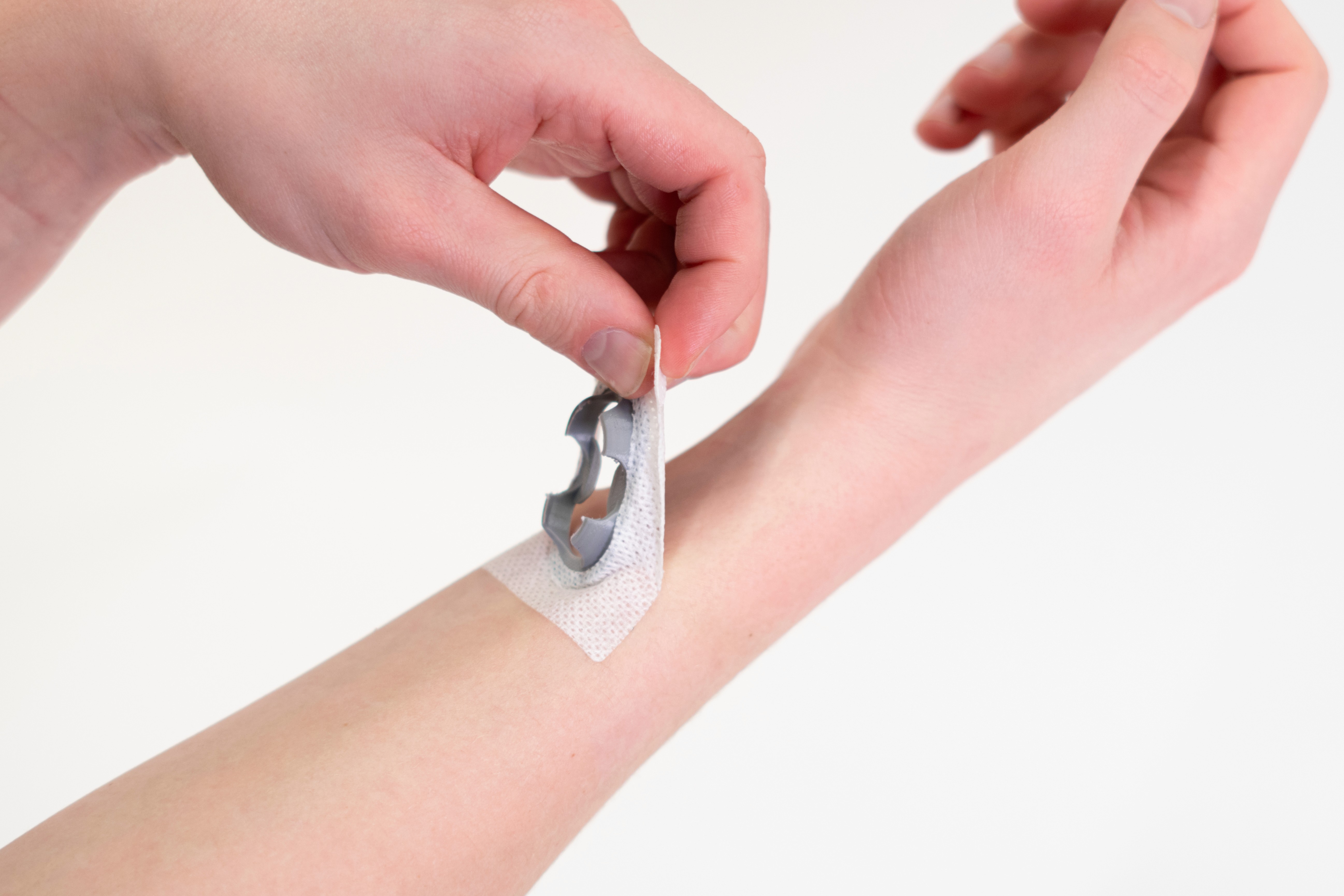
Place the adhesive part on hand
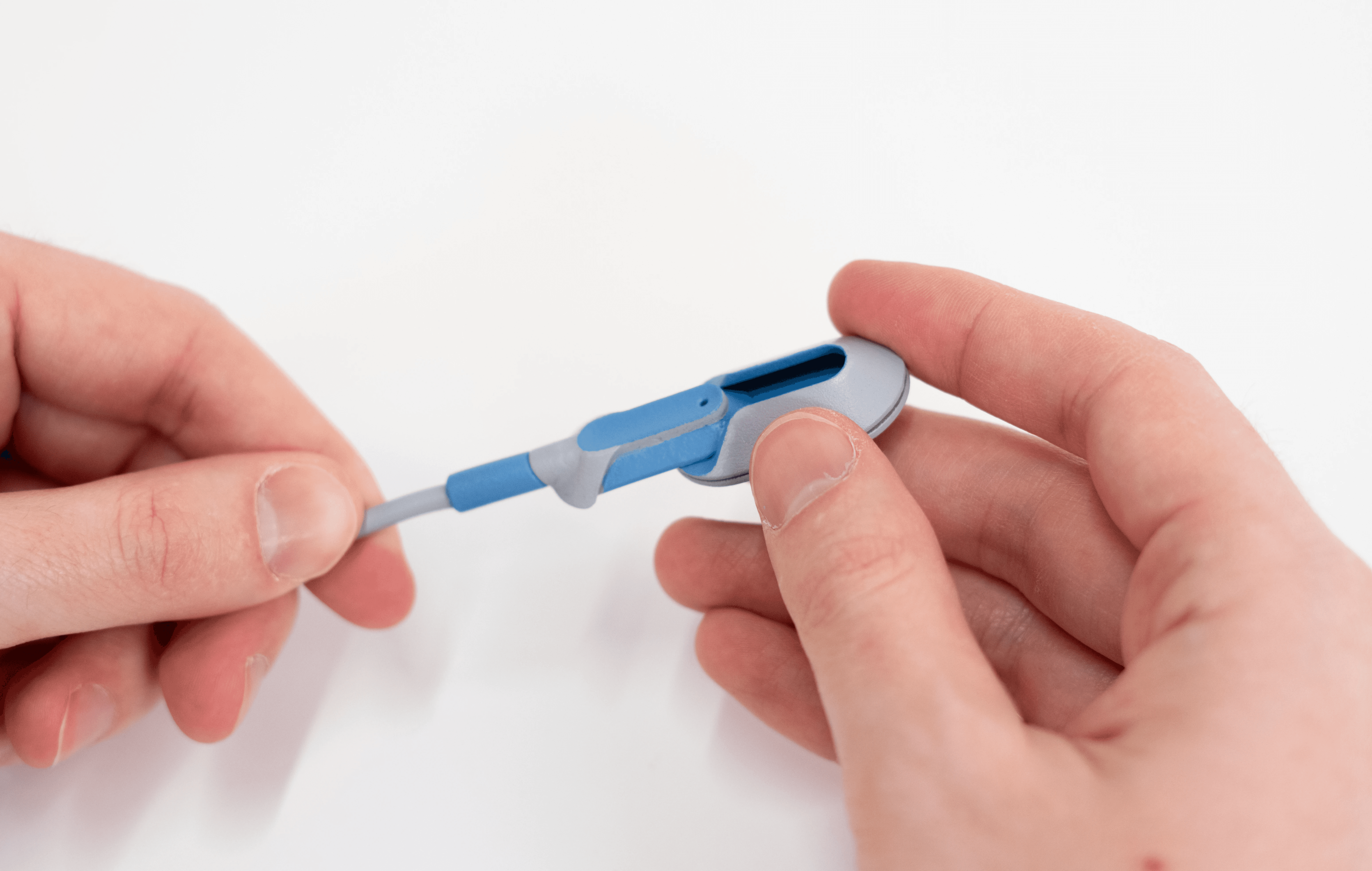
Connect the cable to the sensor
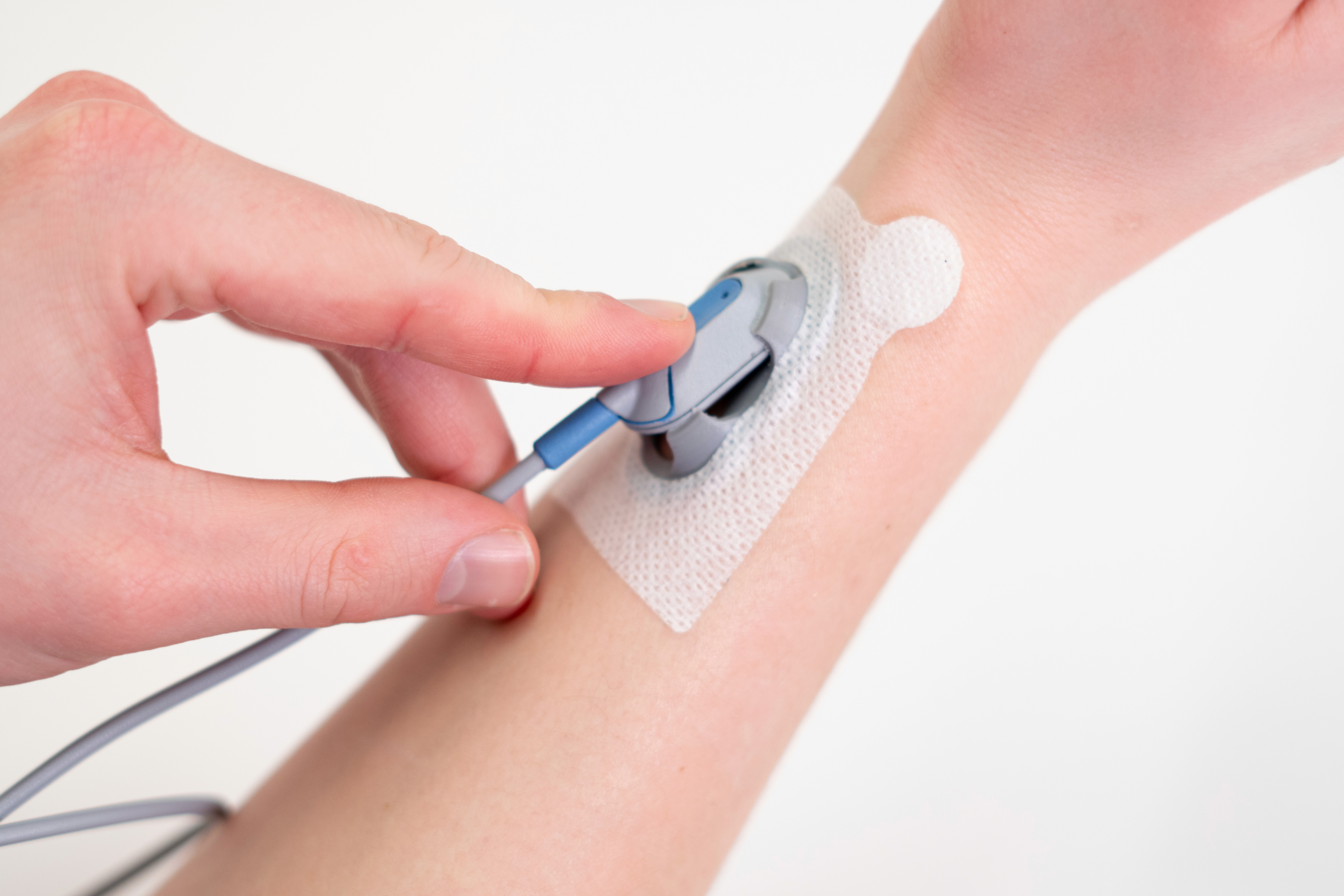
Attach the sensor to the adhesive part on hand
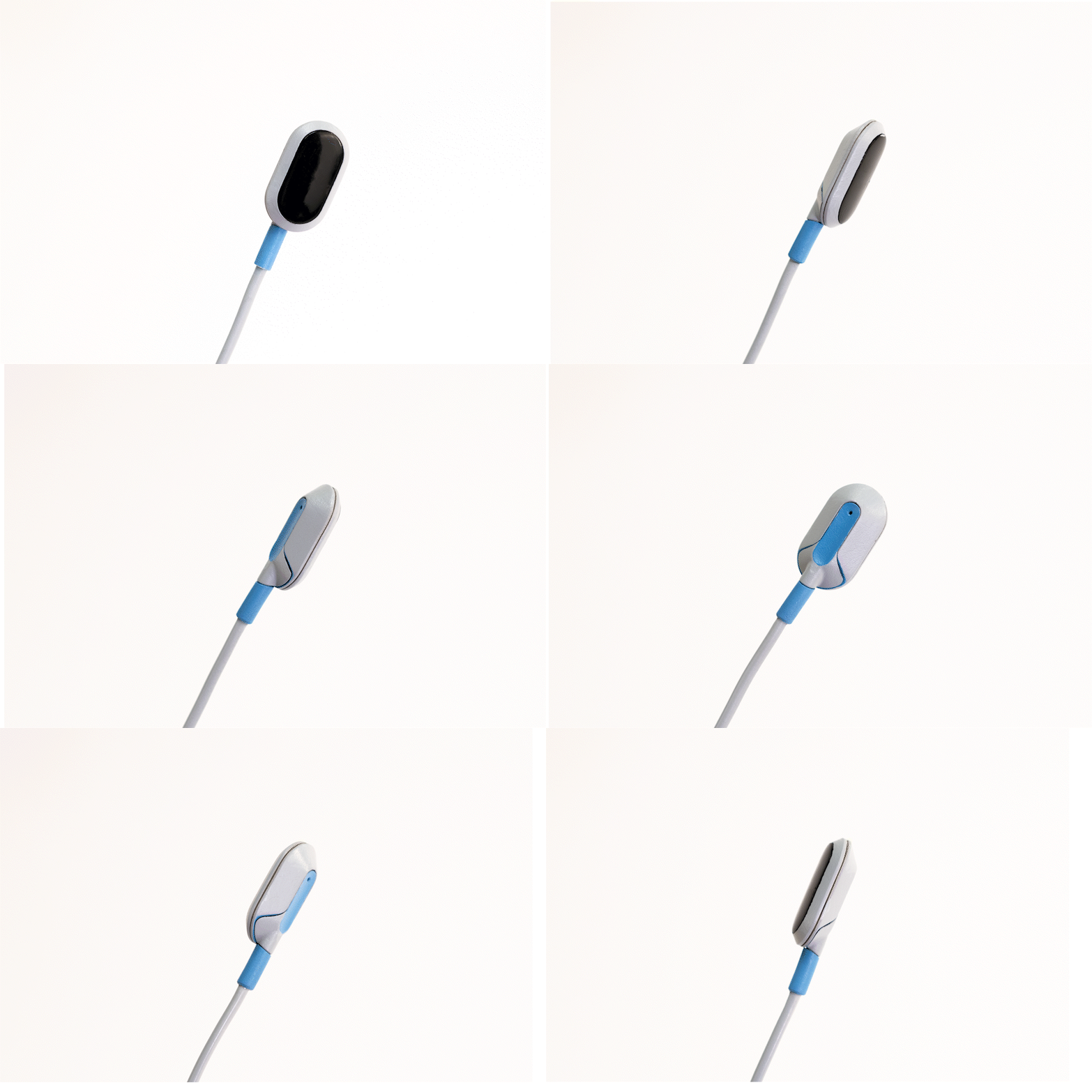
Images of the prototype
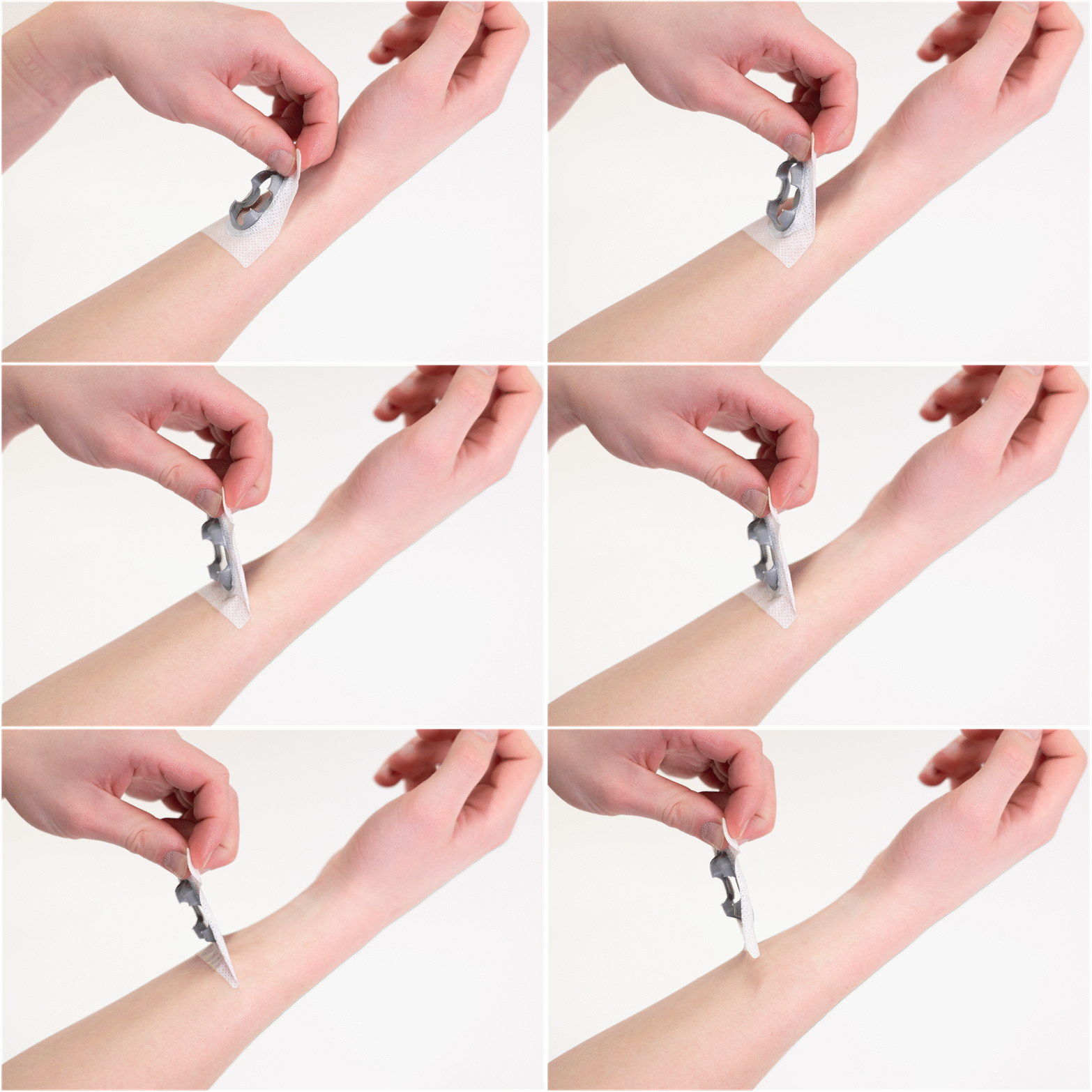
Disposable part being peeled from the wrist
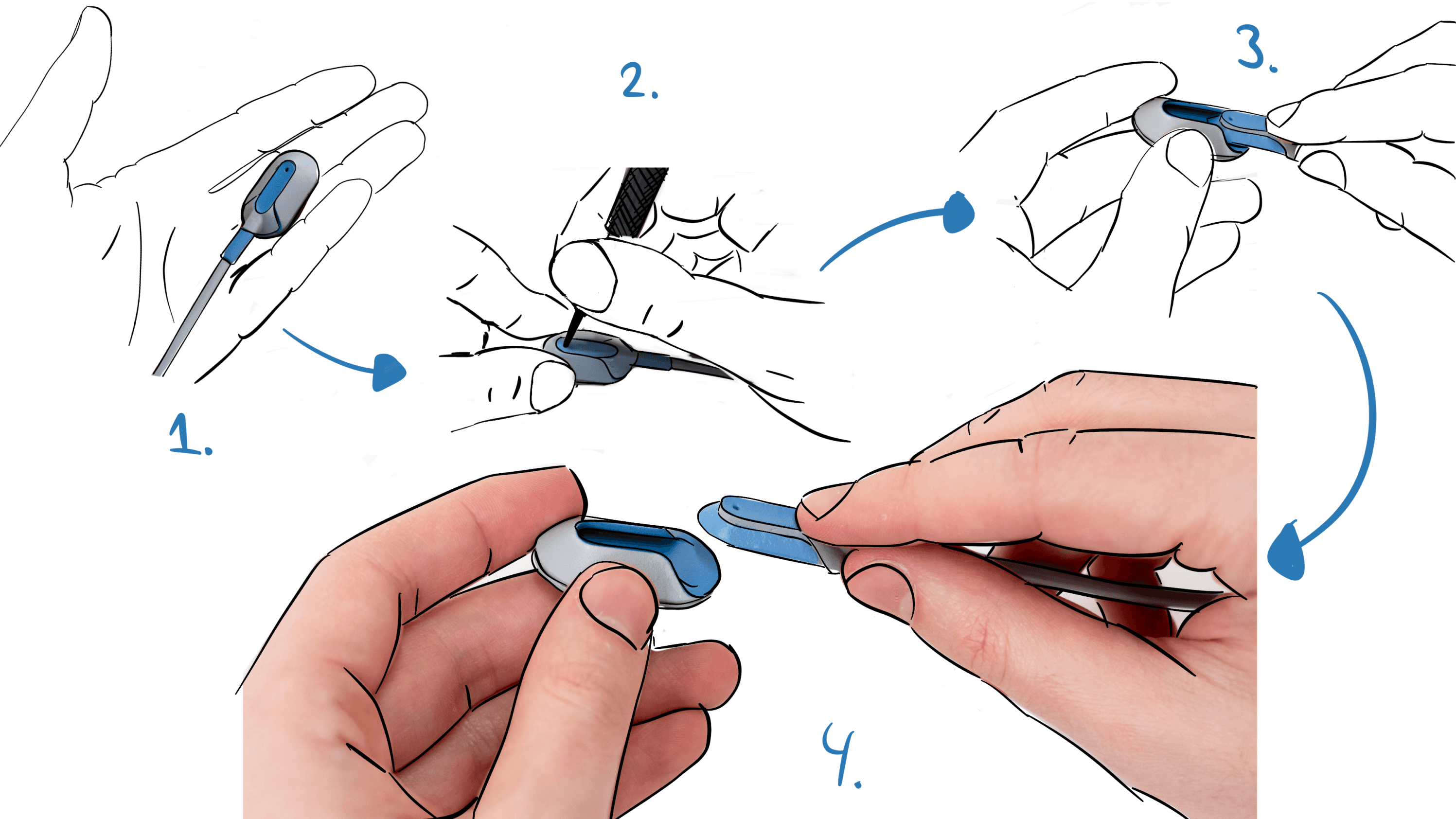
Disassembly of the reusable part
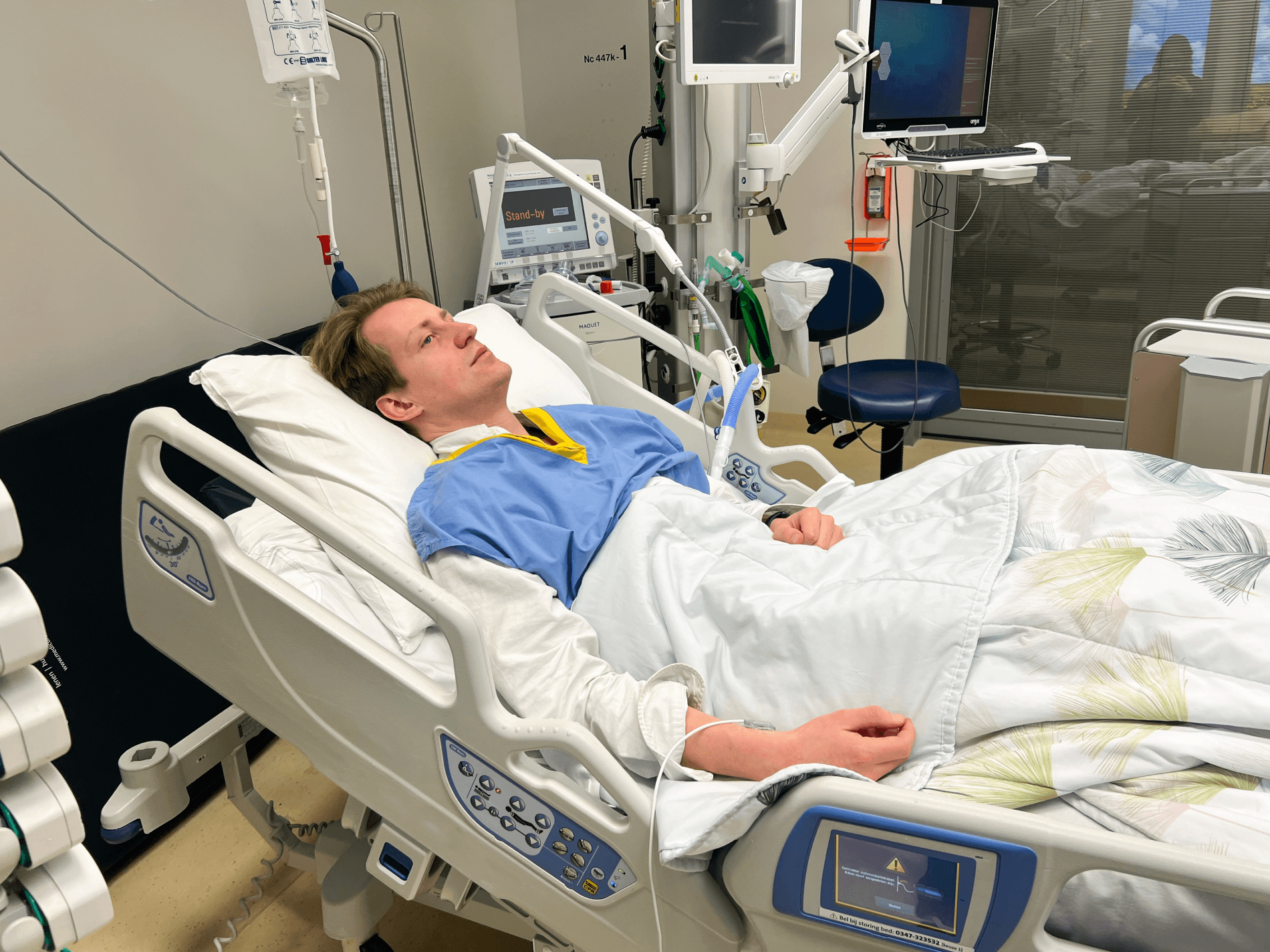
Oximeter being used in the ICU
Technical Design
Material Selection
Materials were chosen to balance sustainability, performance, and cost:
• Sensor Housing: Acrylonitrile Butadiene Styrene (ABS) for toughness and impact resistance.
• Transparent Cover: Polycarbonate (PC) for high optical clarity.
• Sensor Mount (Disposable): High-Density Polyethylene (HDPE) for flexibility, durability, and low carbon footprint
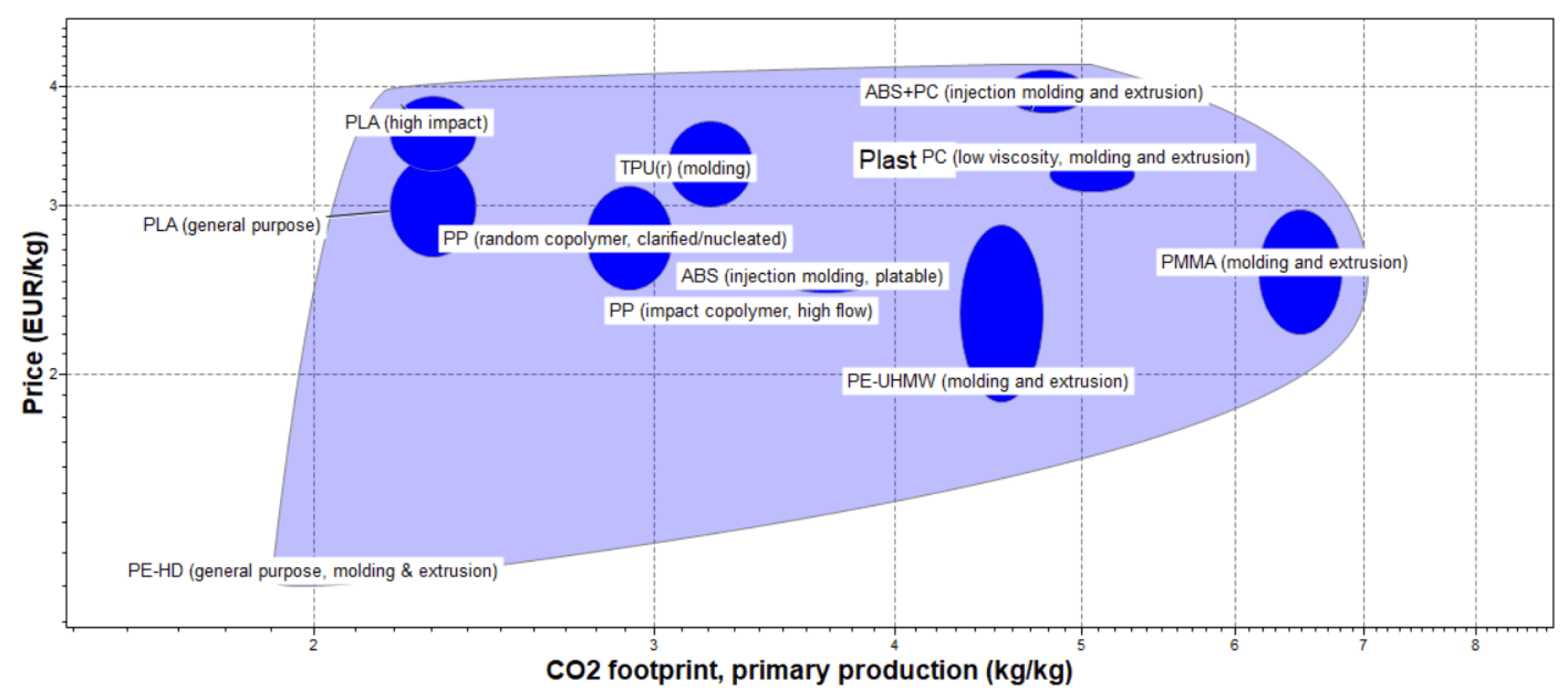
Material Selection graph from AnsysGranta
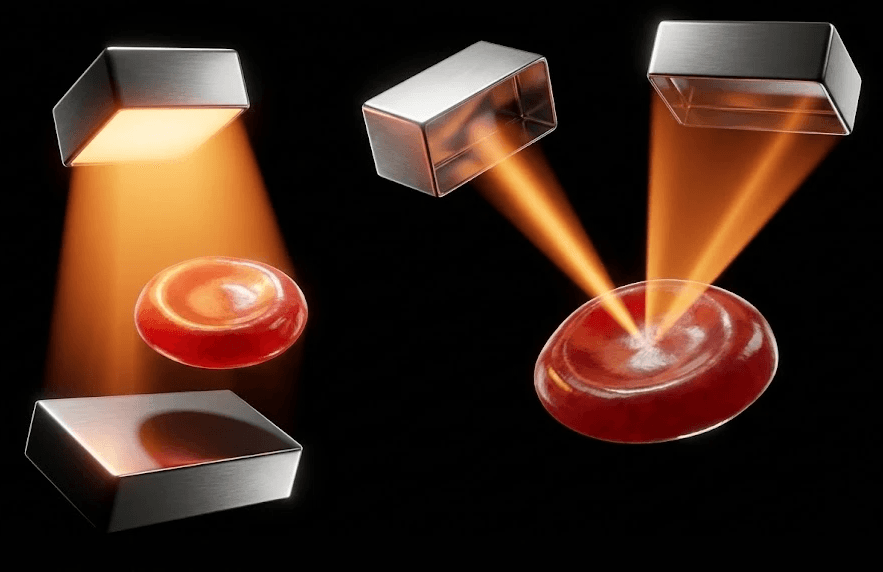
Transmissive Vs Reflective Oximetry
Sensor Technology
The use of reflective oximetry allows us to use as little advanced materials in the sensor mount as necessary, it specifically allows us to remove any electrical components out of the disposable part.
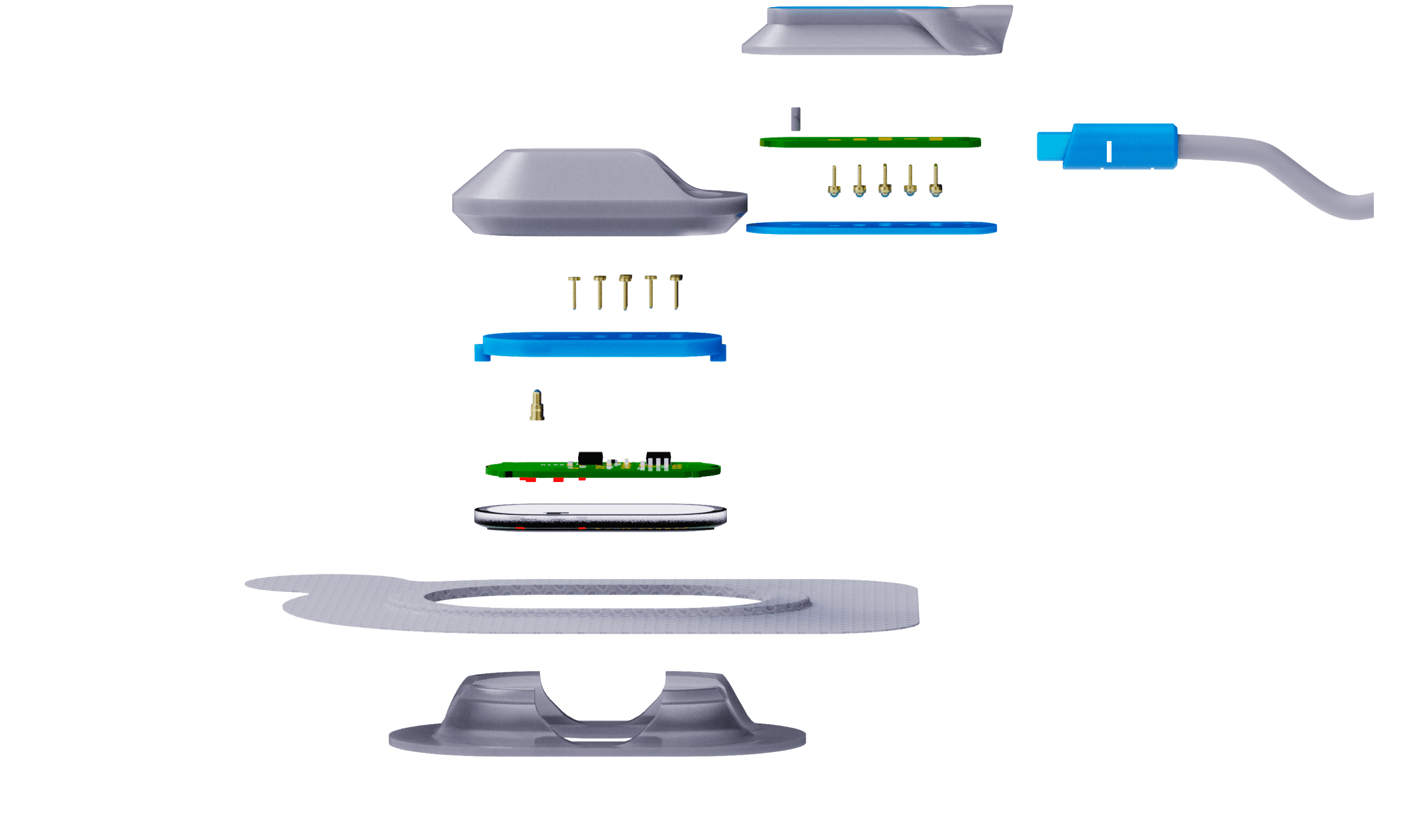
Exploded View of the product
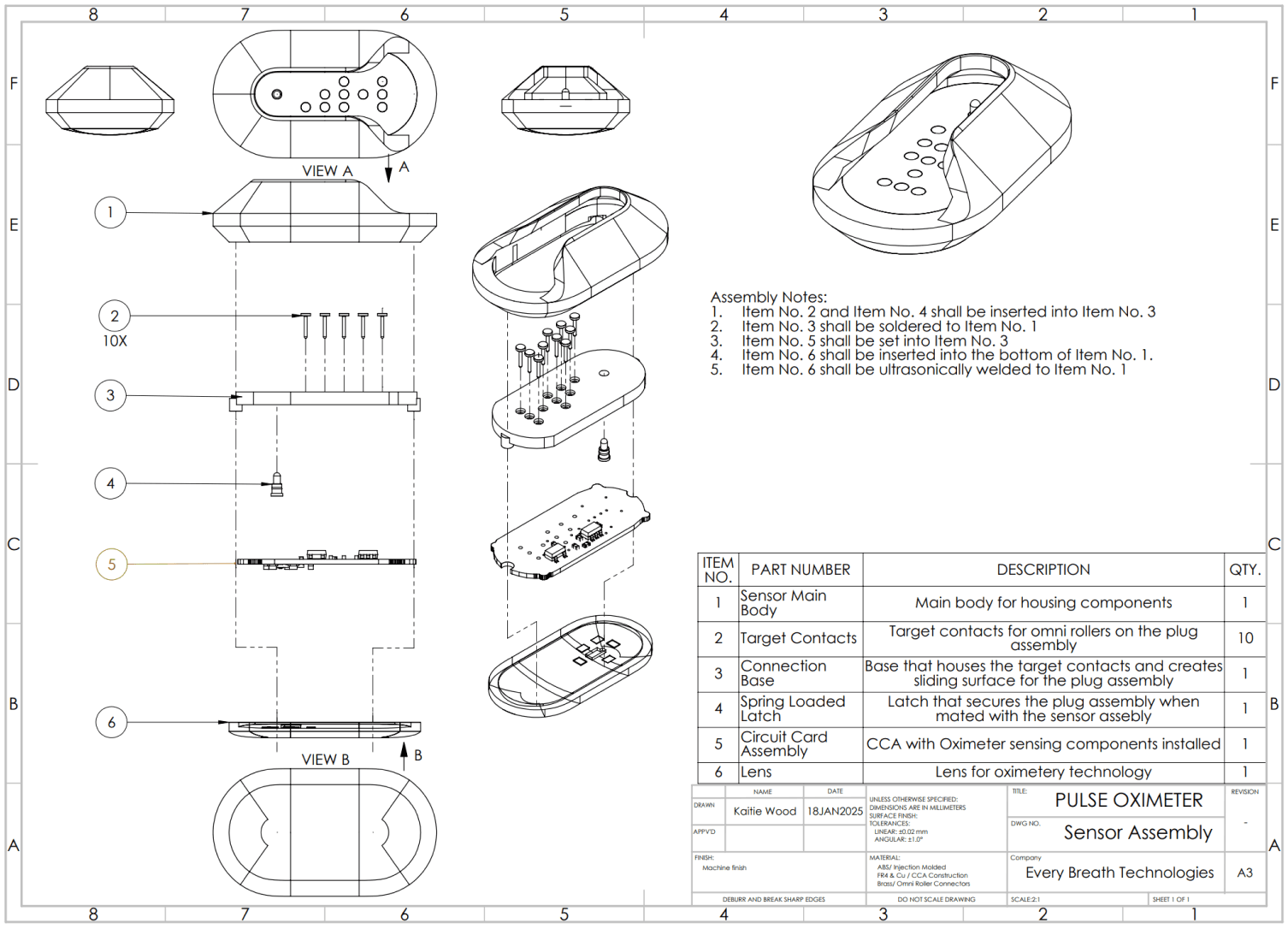
Technical Drawing of the product
Sustainability Assesment
LCA Insights
The Flex-O₂ has a higher initial carbon footprint (0.46 kg CO₂) than current disposable sensors.
• However, when zoomed out over 600 use cycles, the Flex-O₂ significantly decreases its carbon footprint per-use compared to single-use oximeters and becomes comparable to existing reusable oximeters.
The design successfully meets the requirement of being more sustainable than the current disposable product
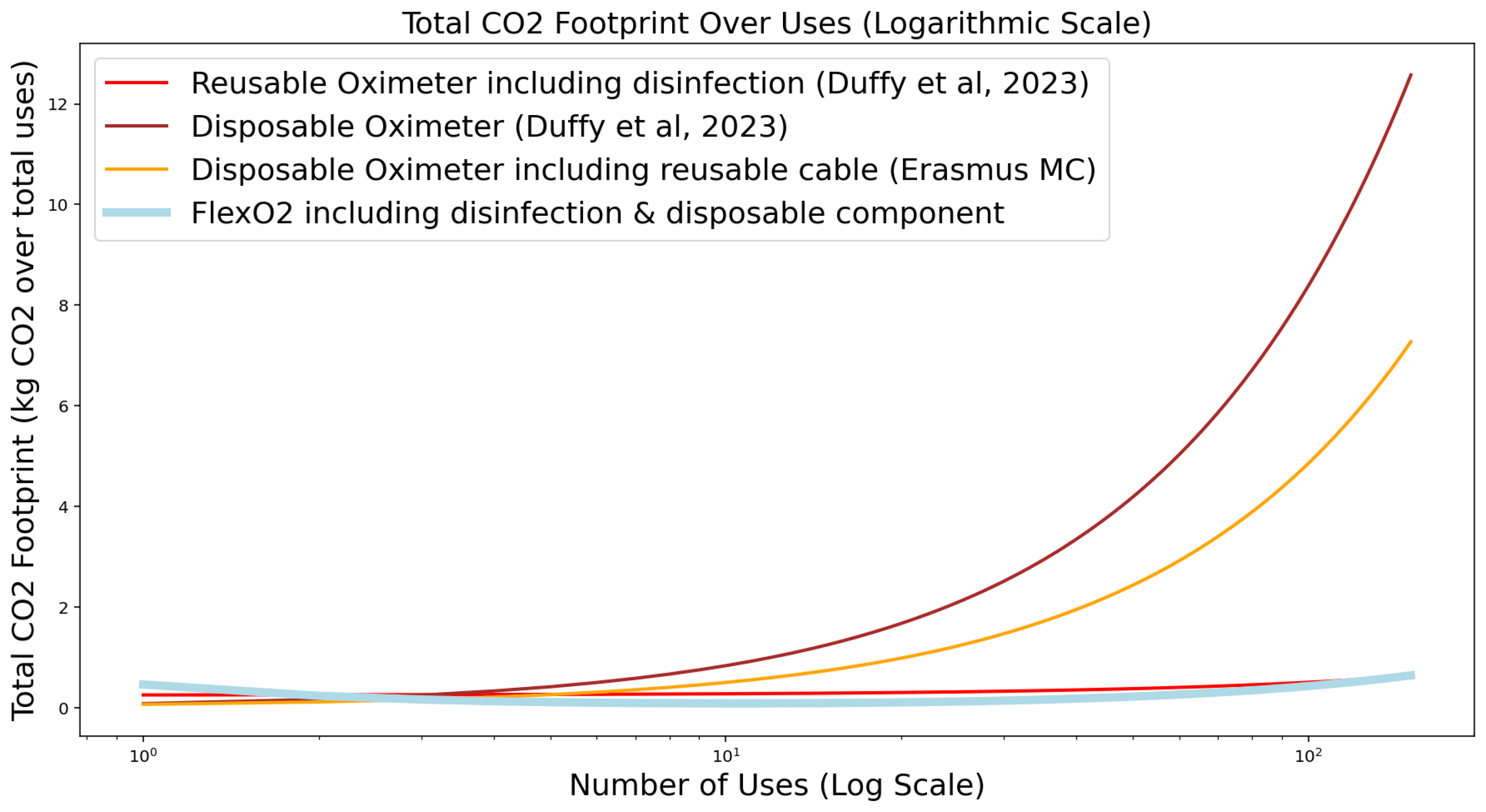
Comparing FlexO2 with other Oximeters
OTHER PROJECTS
OTHER PROJECTS
OTHER PROJECTS

DYNAFIT - Democratizing 4D Anthropometry for Ultra-Personalization
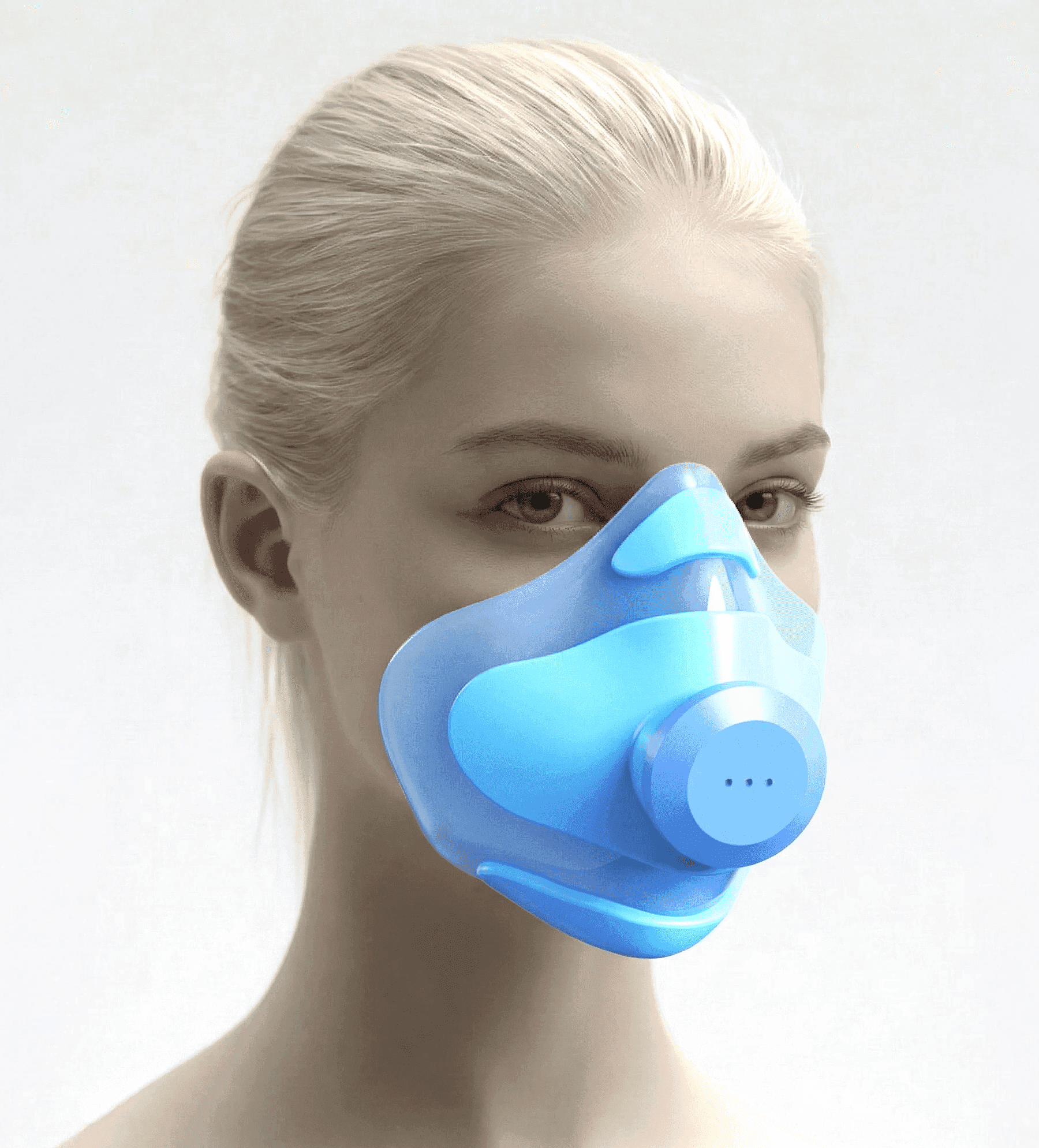
Redesigning Voice Mask for Dynamic Jaw Movement

Emotion Echo - Emotion Aware Design Assistant
Flex O2 - An Reusable Sustainable Oximeter

Caliga - A custom fit for every foot

Amamuse - Turning inspiration into music with AI

Scarabrew - Bio inspired bottle opener

Emotion Driven Image Generation in Comfy UI
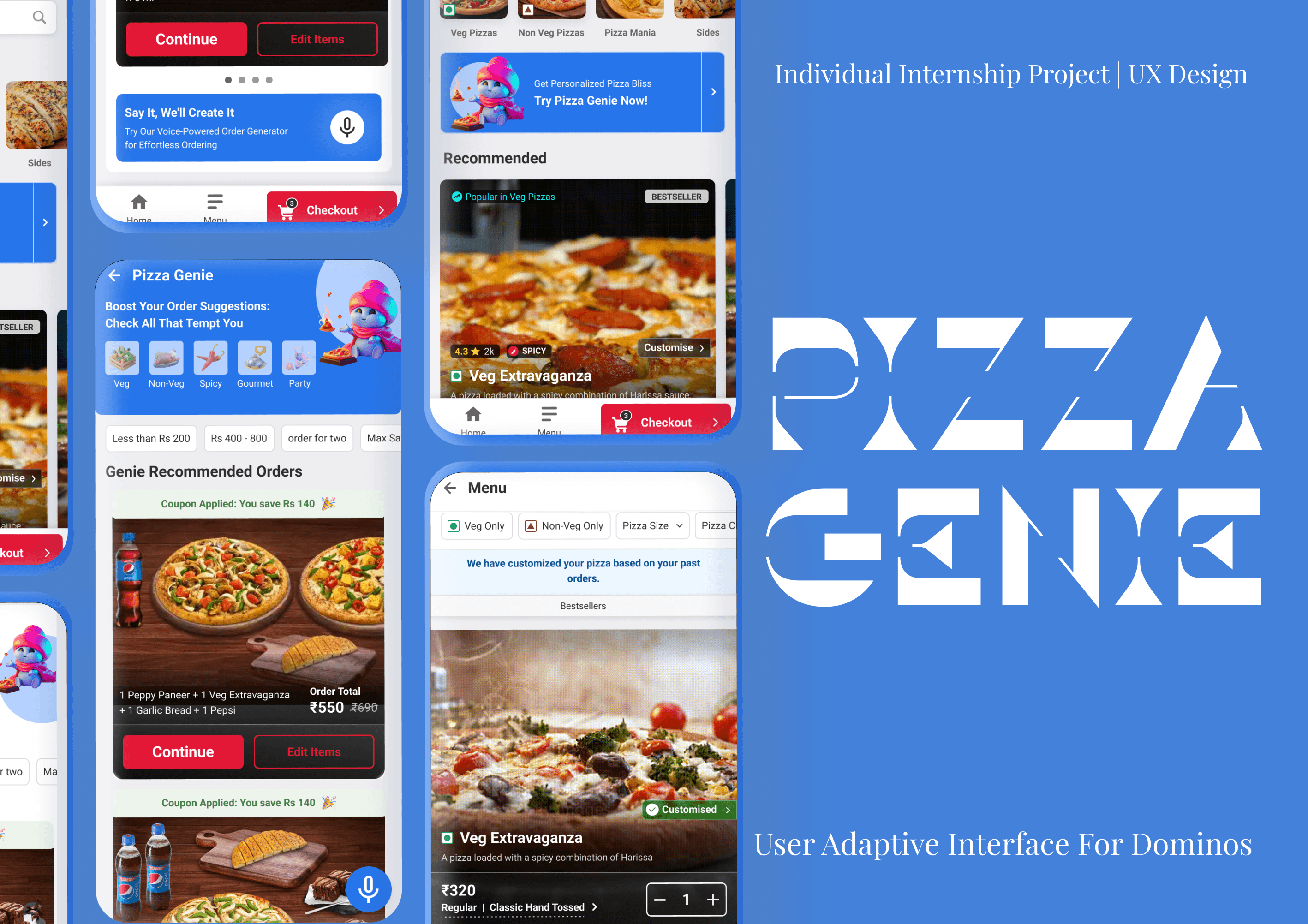
Pizza genie - User adaptive interface for Dominos